
Sauces & Condiments
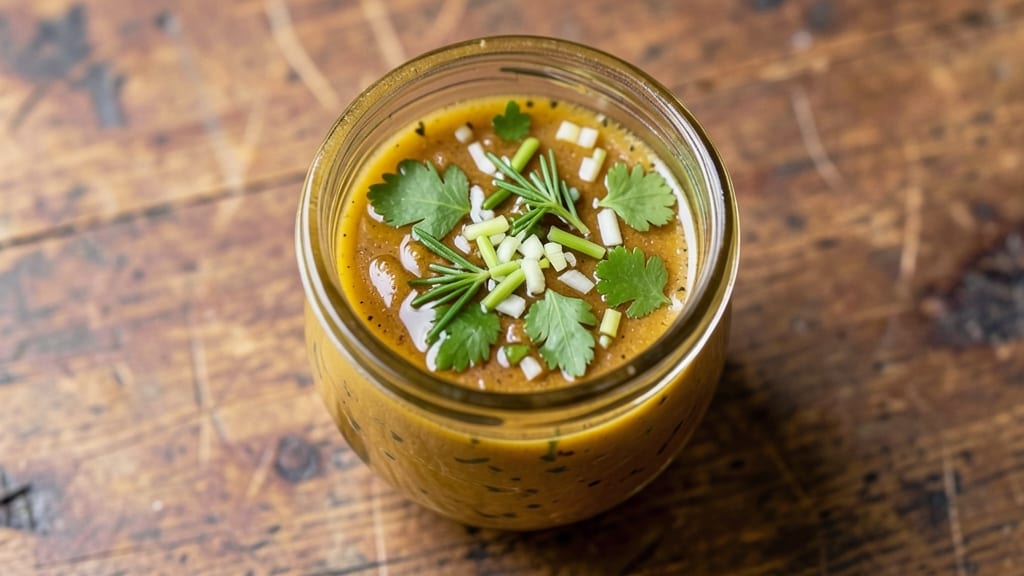
A recipe for salad dressing calls for 3 tablespoons of this bold herb vinaigrette, and that's exactly where the magic begins. This isn't just another dressing—it's a flavor-packed foundation that transforms simple greens into a restaurant-worthy meal.
The secret lies in balancing acidity, richness, and fresh herbs to create a dressing that clings perfectly without overpowering your salad.
What sets this recipe apart is its versatility—whether you're drizzling over mixed greens, tossing with roasted vegetables, or using as a marinade, the 3 tablespoons of olive oil create a silky emulsion that enhances every bite.
The combination of Dijon mustard and white wine vinegar adds depth, while fresh tarragon, chives, and parsley bring bright, herbaceous notes that elevate even the humblest ingredients.
The result is a dressing that's perfectly balanced—tangy yet rich, fresh yet complex—with a texture that's smooth enough to coat every leaf without turning soggy. The ingredients come together in minutes, but the flavor develops as it sits, making it ideal for meal prep or last-minute dressing needs.
Store it in an airtight container for up to a week, or make a double batch for easy weeknight meals. This isn't just a recipe; it's a game-changer for anyone who wants dressing that tastes homemade, not store-bought.
Ingredients for a recipe for salad dressing calls for 3 tablespoons
Nine ingredients create a silky, restaurant-quality vinaigrette that elevates any salad.
| Ingredient | Amount | Notes |
|---|---|---|
| Extra-Virgin Olive Oil 🫒 | ¾ cup | High-quality, fruity variety preferred |
| White Wine Vinegar 🍷 | ½ cup | Dry, crisp vinegar for balance |
| Dijon Mustard 🌶️ | 2 tbsp | Whole-grain for texture and depth |
| Fresh Tarragon Leaves 🌿 | ¼ cup | Finely chopped, stems removed |
| Fresh Chives 🌱 | ¼ cup | Finely chopped, including roots |
| Fresh Flat-Leaf Parsley 🌿 | ¼ cup | Finely chopped, stems removed |
| Shallots 🧅 | 2 whole | Finely minced, or sub with 2 tbsp onion |
| Granulated Sugar 🍚 | 1 tsp | Balances acidity, optional for tart preference |
| Diamond Crystal Kosher Salt 🧂 | ½ tsp | Adjust to taste, essential for seasoning |
| Fresh Lemon Juice 🍋 | 2 tbsp | Freshly squeezed, for brightness |
The olive oil is non-negotiable—California Olive Ranch or Bertolli are my go-tos for that fruity, peppery depth. White wine vinegar should be dry and crisp; Bragg or Annie's work perfectly. Fresh herbs are where this dressing shines: tarragon brings anise-like elegance, while chives and parsley add brightness. For the best quality, grab herbs from the farmers market—they hold up better than grocery store bundles. Shallots add subtle sweetness; if unavailable, minced red onion works, but taste it first—some varieties can be bitter.
No Dijon? Whole-grain mustard is essential for texture, but if you're in a pinch, yellow mustard plus 1 tsp honey mimics the depth. Fresh herbs wilt fast—dried tarragon at half the amount works in a bind, though it lacks complexity. The sugar balances acidity; honey or maple syrup can substitute, but adjust to taste. For a tangier dressing, increase lemon juice by 1 tbsp increments. Storage: transfer to an airtight jar and refrigerate immediately—this prevents oil separation and preserves freshness. Shake vigorously before each use, as the emulsion naturally separates over time.
This dressing develops flavor as it sits, so make it a day ahead for optimal balance. It keeps for up to 1 week in the fridge, though the herbs may lose vibrancy after 3-4 days. For longer storage, freeze in 1-tbsp portions—thaw and shake to re-emulsify. Double the batch for meal prep; it's perfect over roasted vegetables, grain bowls, or grilled proteins. The emulsion is stable enough for marinades or drizzling over soups, but avoid high-heat cooking, as it can break down.
Why You'll Love This Recipe
- I’ll be real: this dressing lasts forever. A little goes a long way, so I make a big batch and it stretches across salads, fish, and even as a finishing drizzle for soups. Plus, the ingredients are cheap—no fancy imports, just good stuff you probably already have.
- Three-Ingredient Whip: I keep a jar of this in my fridge because it’s the dressing I make when I’m too tired to think. Just shake olive oil, vinegar, and a spoonful of Dijon—no measuring cups, no stress. The mustard emulsifies it instantly, so no blender or whisking required.
- Anise-Kissed Brightness: Honestly, the tarragon and chives turn this into something special. That licorice-y tarragon punch cuts through greens like a breath of fresh air, while the chives add a tiny zing that makes every bite feel like a little celebration.
- Weeknight Superstar: Between us, this is my go-to for everything from quick lunches to fancy dinner sides. Drizzle it on roasted veggies, toss it with grains, or even use it as a marinade—it’s the one dressing that never lets me down, even when I’m winging it.
Step-by-step instructions for bold herb vinaigrette
This method delivers a perfectly balanced vinaigrette with vibrant herb notes and silky texture every time.
Prepare the Herb Blend
In a small mixing bowl, combine the 0.25 cup fresh tarragon leaves, 0.25 cup fresh chives, and 0.25 cup fresh flat-leaf parsley. Use a sharp chef's knife to finely chop all herbs together, removing any thick stems. The herbs should be minced to the consistency of coarse sand—this ensures even distribution throughout the dressing and prevents clumps. I like to work in batches if needed, pressing down with the heel of my knife for maximum control.
Set the herb mixture aside while you prepare the remaining ingredients. The freshness of these herbs is critical—they should smell bright and aromatic. If using dried herbs as a substitute, reduce to 1 tablespoon total and steep in 2 tablespoons warm water for 10 minutes before straining.
Create the Base Emulsion
In a medium bowl, whisk together the 0.5 cup white wine vinegar, 2 tablespoons Dijon mustard, 1 teaspoon granulated sugar, and 0.5 teaspoon Diamond Crystal kosher salt until completely dissolved. The sugar helps balance the acidity of the vinegar while the mustard acts as an emulsifier that will bind the oil later. Whisk for about 30 seconds to ensure the sugar fully dissolves—undissolved sugar will create grainy texture in your dressing.
Next, add the 2 tablespoons fresh lemon juice and whisk again until fully incorporated. The lemon juice adds brightness that cuts through the richness of the olive oil. Taste the mixture now—it should be tangy with a touch of sweetness. If it's too sharp, add a pinch more sugar; if too mild, add a splash more vinegar. This is your flavor baseline before adding the oil.
Build the Emulsion with Oil
With the whisking motion going, very slowly drizzle in the 0.75 cup extra-virgin olive oil while continuing to whisk vigorously. The key here is patience—adding the oil too quickly will cause the dressing to break and separate. Start with just a few drops, whisking until those droplets disappear before adding more. This gradual incorporation creates a stable emulsion where the oil and vinegar remain permanently combined.
Once all the oil is incorporated, the dressing should have a thick, creamy consistency similar to heavy cream. If it's too thin, whisk in 1 teaspoon more Dijon mustard; if too thick, add 1 teaspoon water at a time until you reach the desired consistency. The dressing should coat the back of a spoon but still pour smoothly.
Incorporate Shallots and Final Adjustments
Finely mince the 2 whole shallots using a microplane or very sharp knife. Add them to the dressing and whisk until fully combined. The shallots will add subtle sweetness and depth of flavor that complements the herbs. Let the mixture sit for 5 minutes to allow the shallots to infuse—this resting period lets all the flavors meld together.
Finally, fold in the prepared herb mixture using a rubber spatula. Gently stir until the herbs are evenly distributed throughout the dressing. Taste again and make final adjustments: more salt for seasoning, more lemon juice for brightness, or more vinegar for acidity. The dressing should be perfectly balanced with bright herb notes, a touch of sweetness from the shallots and sugar, and a clean acidity from the vinegar.
Rest and Serve
Transfer the dressing to a clean jar or airtight container and let it rest at room temperature for at least 30 minutes before using. This resting period allows the flavors to fully develop and the emulsion to stabilize. The dressing will keep in the refrigerator for up to 1 week, though the herbs will continue to brighten the flavor over time.
When ready to use, give the dressing a good stir before pouring over your salad. The perfect herb vinaigrette should coat each leaf evenly, adding vibrant color and complex flavor with every bite. This dressing works beautifully with mixed greens, roasted vegetables, or grilled proteins—its bold herb profile stands up to almost any ingredient.
Pro Tips For Making A Recipe For Salad Dressing Calls For 3 Tablespoons
- WHISK IN STAGES: Start by mixing the Dijon mustard with just 1 tablespoon of olive oil—this thick paste emulsifies better than throwing everything in at once. I learned this the hard way when my dressing broke into oil pools after adding the vinegar.
- CHOP CHIVES FINE: Use the tip of your knife to mince chives into tiny confetti-sized pieces—they’ll distribute evenly and not settle at the bottom like big chunks. Fresh tarragon leaves should be torn, not chopped, to keep their delicate flavor intact.
- MEASURE VINEGAR AFTER: Let the mustard-oil base sit for 2 minutes before adding the vinegar—this gives the mustard time to mellow out. Dumping vinegar too soon makes the dressing sharp and unbalanced, no matter how good the olive oil.
- SALT THE OIL: Add a pinch of salt to the olive oil before emulsifying—it rounds out the mustard’s bite and prevents the dressing from tasting flat. I was skeptical until I tried it, and now I can’t imagine skipping it.
Regional styles of these flavors
French Herb Vinaigrette
The classic French approach uses tarragon and chives as its star herbs, balanced with white wine vinegar and shallots for depth. This version replaces parsley with fennel fronds for a subtle licorice note that pairs beautifully with goat cheese salads or roasted chicken.
I like to add 1 teaspoon finely grated lemon zest to enhance the brightness—it’s a trick I picked up from a Parisian chef. 🌿
Italian Basil Pesto Dressing
Swap the tarragon for 1 cup fresh basil leaves and add ¼ cup pine nuts (or walnuts) for texture. Use lemon juice instead of vinegar and reduce the sugar to ½ teaspoon—this creates a lighter, fresher dressing perfect for Caprese salads or grilled vegetables.
For extra richness, stir in 2 tablespoons grated Parmesan just before serving. This version keeps for only 3 days due to the basil’s fragility.
Southern US Buttermilk Ranch
Transform this vinaigrette into a creamy ranch by replacing the vinegar with ½ cup buttermilk and adding ¼ cup sour cream. Swap the herbs for 1 tablespoon dried dill and 1 tablespoon dried chives, plus 1 teaspoon garlic powder.
This dressing is a crowd-pleaser for fried chicken salads or cornbread croutons. Store in an airtight container with a parchment paper barrier to prevent sogginess—it lasts 5 days in the fridge.
Mediterranean Lemon-Oregano
Infuse the dressing with 1 teaspoon dried oregano and ½ teaspoon red pepper flakes for a bold, herby kick. Replace the shallots with 1 minced garlic clove and add 1 tablespoon capers for briny depth.
This version shines over Greek salads with cucumbers, tomatoes, and olives. For extra freshness, stir in 2 tablespoons chopped fresh mint just before serving—it’s a staple in my summer meal prep. 🍋
Asian-Inspired Sesame-Ginger
Replace the white wine vinegar with ½ cup rice vinegar and add 1 tablespoon soy sauce and 1 teaspoon grated ginger. Swap the herbs for 2 tablespoons chopped cilantro and 1 tablespoon chopped Thai basil.
Finish with 1 teaspoon toasted sesame oil and 1 teaspoon sesame seeds for a nutty, umami-rich dressing perfect for soba noodle salads or grilled shrimp. This version keeps for 4 days and pairs beautifully with cucumber and edamame.
Smoky Chipotle Lime
Add ½ teaspoon adobo sauce from canned chipotles and 1 teaspoon lime juice (instead of lemon) for a smoky, tangy twist. Replace the shallots with 1 minced jalapeño for heat. This dressing is ideal for Southwestern bowls with black beans, corn, and avocado.
For extra depth, stir in 1 teaspoon smoked paprika just before serving—it’s a game-changer for hearty salads. Store in a dark glass jar to preserve the smoky flavors. 🌶️
Nutrition facts
Frequently asked questions
Why does this dressing call for 3 tablespoons of Dijon mustard instead of regular mustard?
Dijon mustard contains whole mustard seeds, which create a smoother, creamier texture that helps emulsify the oil and vinegar perfectly. Regular mustard is coarser and can make the dressing grainy. The 3 tablespoons in this recipe act as a natural emulsifier, ensuring your dressing stays silky and doesn't separate.
Can I make this dressing without fresh herbs?
Yes, but the flavor will be less vibrant. Use 1 tablespoon dried tarragon, 1 tablespoon dried chives, and 1 tablespoon dried parsley (total). Steep the dried herbs in 2 tablespoons warm water for 10 minutes before straining and adding to the dressing. For best results, use this substitution only if you can't find fresh herbs.
How do I fix a separated dressing?
If your dressing separates, simply whisk it vigorously for 1-2 minutes—the mustard will re-emulsify the oil and vinegar. For stubborn separation, add ½ teaspoon more Dijon mustard and whisk again. Store it in an airtight container to prevent future separation. The key is patience when adding oil during preparation!
What can I use if I don't have shallots?
Finely minced red onion or green onion works in a pinch, but taste first—some varieties can be bitter. For a milder flavor, use ½ teaspoon onion powder instead. Shallots add subtle sweetness, so if you omit them, increase the sugar slightly to 1.5 teaspoons to balance acidity.
Is this dressing safe to eat raw?
This dressing is designed to be consumed raw, as all ingredients are safe for uncooked use. The extra-virgin olive oil and vinegar act as natural preservatives, making it shelf-stable for up to 1 week in the fridge. Just avoid adding any cooked or raw ingredients that aren't safe for consumption without cooking.