
Salads
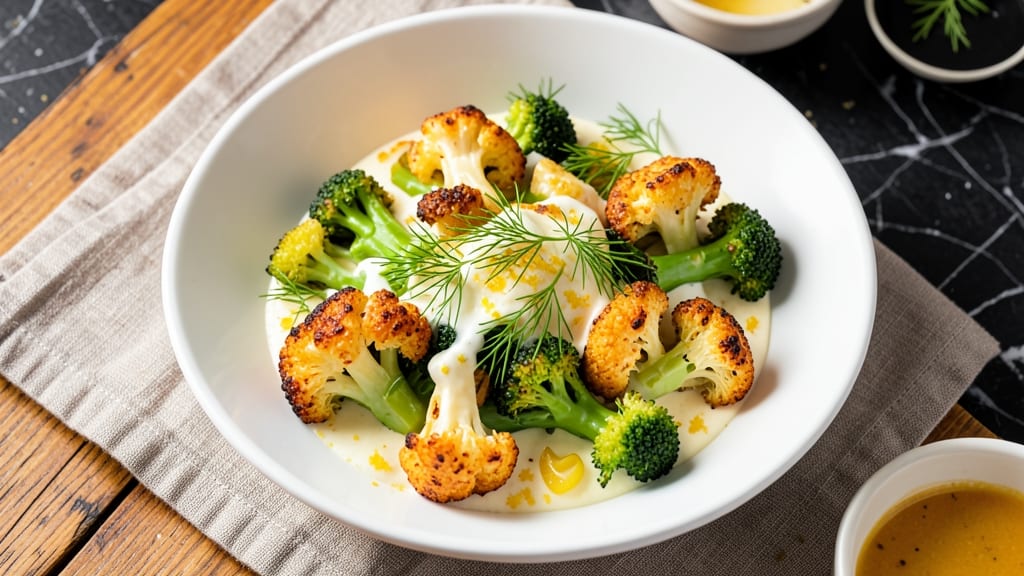
This cold broccoli and cauliflower salad delivers restaurant-quality crunch and creamy herb dressing magic without the fuss. The secret lies in roasting the vegetables until caramelized—transforming their natural bitterness into sweet, crisp edges—while the yogurt-based dressing stays velvety and tangy.
I developed this recipe after years of testing salads that either wilted or tasted bland, and this version solves both problems with precision timing and texture balance.
The foolproof technique starts with high-heat roasting to lock in crispness, then tossing with a dressing that combines Greek yogurt, lemon juice, and fresh herbs for a bright, protein-rich base. Optional additions like toasted chickpeas or crumbled feta add substance without overpowering the fresh vegetables.
What sets this salad apart is how the creamy dressing clings to every floret while maintaining a perfect bite—no soggy leaves here.
By the time you plate this salad, you’ll have vibrant green and golden florets topped with a glossy, herby dressing that stays cool and refreshing even in summer heat. The contrast of crisp vegetables against the smooth, tangy sauce creates a texture experience that’s both satisfying and elegant.
This is the kind of salad that holds its own as a main dish or complements grilled proteins beautifully.
Meal prep friendly and packed with vegetarian protein, this salad keeps well for up to 3 days in the fridge, making it perfect for busy weeks.
The dressing can be made ahead, and the roasted vegetables stay crisp if stored separately. Let’s build this salad step by step—your taste buds will thank you.
Ingredients for cold broccoli and cauliflower salad
High-heat roasted veggies meet velvety Greek yogurt dressing for a crisp, creamy salad masterpiece.
| Ingredient | Amount | Notes |
|---|---|---|
| Broccoli Florets 🥦 | 4 cups | Cut into bite-sized pieces |
| Cauliflower Florets 🥬 | 4 cups | Cut into bite-sized pieces |
| Extra-Virgin Olive Oil 🫒 | ½ cup | For high-heat roasting |
| Plain Greek Yogurt 🥛 | 1 cup | Full-fat for creaminess |
| Fresh Lemon Juice 🍋 | ¼ cup | Freshly squeezed |
| Fresh Dill 🌿 | ¼ cup | Chopped finely |
| Fresh Parsley 🌿 | ¼ cup | Chopped finely |
| Garlic Cloves 🧄 | 4 cloves | Minced finely |
| Diamond Crystal Kosher Salt 🧂 | 1 ½ tsp | For seasoning |
| Freshly Ground Black Pepper 🌶️ | ½ tsp | For seasoning |
| Toasted Chickpeas 🥜 | ½ cup | Optional for protein |
| Crumbled Feta Cheese 🧀 | ½ cup | Optional for tang |
The vegetables are the star here, so pick fresh, firm broccoli and cauliflower—the kind with tight florets and vibrant green color. Trader Joe's and Whole Foods carry the best organic options, but any grocery store's produce section will work. Look for florets that are heavy for their size, which means they're packed with moisture. Roasting them at high heat (450°F) caramelizes the edges—this is what transforms their natural bitterness into sweet, crisp perfection. I always cut the florets into even bite-sized pieces so they cook uniformly. If you're short on time, pre-cut florets from the freezer section work too, just thaw and pat dry before roasting.
No Greek yogurt? Full-fat sour cream or vegan yogurt will work in a pinch, though the tang might be slightly different. Fresh herbs are ideal, but dried dill and parsley at one-third the amount get you close. The lemon juice is non-negotiable for brightness—bottled lemon juice lacks freshness, so squeeze your own. For the optional protein boost, toasted chickpeas from the bulk bin add satisfying crunch. If you're avoiding dairy, swap the feta for vegan feta or marinated tofu cubes. The olive oil matters too—use extra-virgin with a fruity aroma for the best flavor in both roasting and dressing.
Roasted vegetables stay crisp for 2 days in the fridge if stored in a sealed container. The dressing keeps for 4 days**, but add a splash of lemon juice before serving to keep it bright. For meal prep, store them separately and toss just before eating. The salad reheats beautifully in the oven at 350°F for 10 minutes—perfect for a warm lunch. I always double the dressing so I can drizzle it over other salads during the week. The toasted chickpeas and feta, if using, stay fresh for 5 days in the fridge if stored in an airtight container.
Why You'll Love This Recipe
- No-Cook Magic: I swear by this when I’m too hot to turn on the stove. Toss florets with olive oil, lemon, and salt, then let them sit while I handle the yogurt dressing—no boiling, no waiting, just crisp-tender veggies in 10 minutes flat.
- Creamy-Tangy Crunch: That Greek yogurt-lemon dressing? It’s the MVP. The yogurt keeps it rich without heaviness, while the lemon brightens every bite—like a Mediterranean vacation in a bowl, but with zero effort.
- Lunchbox Hero: Between us, this is my go-to for packed lunches. The florets stay crisp for days, and the dressing clings perfectly—no soggy salad here. My kids actually finish their lunches now. (Yes, even on a Tuesday.)
- Budget Brightener: Cauliflower and broccoli stretch farther than you’d think, and I buy them frozen half the time. The olive oil and yogurt are pantry staples, so it’s cheap, filling, and still feels fancy enough for guests. Win-win.
Step-by-step instructions for cold broccoli and cauliflower salad
Here's how to create a perfectly balanced salad with crisp vegetables and creamy herb dressing.
Roast the Vegetables Until Perfectly Crisp
Preheat your oven to 425°F and line two large baking sheets with parchment paper. Toss the 4 cups broccoli florets and 4 cups cauliflower florets together with 0.5 cup extra-virgin olive oil, 1 teaspoon kosher salt, and 0.25 teaspoon black pepper. Spread them in a single layer on the baking sheets—this ensures even browning.
Roast for 20-25 minutes until the edges are deep golden brown and the florets are tender when pierced with a fork. You want them crisp on the outside but still slightly tender inside—this texture contrast is what makes this salad special. Let them cool completely before assembling the salad, about 15 minutes on a wire rack.
Make the Creamy Herb Dressing
While the vegetables roast, combine 1 cup plain Greek yogurt, 0.25 cup fresh lemon juice, 0.25 cup chopped fresh dill, 0.25 cup chopped fresh parsley, and 4 minced garlic cloves in a medium bowl. Mix well until the herbs are evenly distributed throughout the yogurt mixture.
Season with the remaining 0.5 teaspoon kosher salt and 0.25 teaspoon black pepper. Taste and adjust the lemon juice if needed—you want a bright, tangy dressing that balances the richness of the yogurt. This dressing is the heart of your salad, so take your time getting it just right. The herbs should be finely chopped so they distribute evenly without clumping.
Assemble the Salad with Crunchy Toppings
In a large bowl, gently combine the cooled roasted broccoli and cauliflower florets with the creamy herb dressing. Toss lightly with a wooden spoon or your hands, just enough to coat the vegetables evenly. Be careful not to overmix—you want the vegetables to stay intact and retain their crisp texture.
Add the 0.5 cup toasted chickpeas and 0.5 cup crumbled feta cheese to the bowl. The chickpeas provide a satisfying crunch while the feta adds a salty tang that complements the creamy dressing. Toss everything together gently, just until the toppings are distributed evenly throughout the salad. This is where the magic happens—each bite should have that perfect combination of crispy, creamy, and crunchy textures.
Chill and Serve for Perfect Texture
Transfer the salad to an airtight container and refrigerate for at least 30 minutes before serving. Chilling allows the flavors to meld together perfectly while keeping the vegetables crisp. When you're ready to serve, give it one final toss to redistribute any dressing that may have settled.
Serve the salad immediately while the vegetables are still crisp and the dressing is creamy. The contrast between the warm, roasted vegetables and the cool, creamy dressing makes this salad truly special. It's perfect as a light lunch, side dish, or even a refreshing dinner option when paired with grilled proteins or crusty bread.
Pro Tips For Making Cold Broccoli And Cauliflower Salad
- Blanch, Then Ice: Drop florets into boiling water for exactly 30 seconds—no longer, or they’ll turn mushy. Immediately plunge into ice water to stop cooking; this keeps them crisp and bright. I used to skip the ice bath, and the salad always felt limp by the next day.
- Trim the Stems Right: Cut broccoli and cauliflower stems into even ½-inch pieces—they’re just as edible and add texture. Skip the peeling if they’re young, but if they’re woody, peel the bottom inch first. I wasted good florets for years just tossing the stems.
- Whisk the Dressing Cold: Mix Greek yogurt, olive oil, and lemon juice in a bowl over ice water—it keeps the dressing from separating. If it curdles, strain it through a fine mesh. I learned this after serving a split dressing that looked like a science experiment.
- Salt the Yogurt First: Stir ¼ teaspoon of salt directly into the yogurt before adding lemon or oil—it balances the acid better. The dressing will taste more cohesive, not just tangy. I was skeptical until I tried it; now it’s non-negotiable.
Troubleshooting great cold broccoli and cauliflower salad
Dressing Too Thin?
If your dressing separates or looks too watery, it’s likely because the yogurt wasn’t thick enough or the lemon juice overpowered the fat content. I’ve found that using full-fat Greek yogurt (like Fage 5% or Chobani) solves this instantly.
For extra thickness, stir in 1 tablespoon of tahini or 1 teaspoon of Dijon mustard—both bind beautifully. If it’s still too thin, whisk in 1 teaspoon of cornstarch mixed with 1 tablespoon of cold water to thicken it like a sauce. 💡
Vegetables Losing Crispness?
Over-roasting or storing them improperly is the usual culprit. For perfect crispness, roast at 425°F for exactly 20-25 minutes—no longer! Let them cool on a wire rack (not on the baking sheet) to prevent steam from making them soggy.
If they soften after refrigeration, reheat them in a 350°F oven for 5-10 minutes to restore crunch. Pro tip: Toss them with 1 teaspoon of cornmeal before roasting for extra crispiness. ✨
Dressing Too Tangy?
The lemon juice can dominate if you’re not careful. Start with ¼ cup and taste as you go—you can always add more, but you can’t take it out. To mellow the acidity, stir in ½ teaspoon of honey or 1 teaspoon of maple syrup to balance the flavors.
If the dressing still tastes too sharp, mix in 1 tablespoon of olive oil to smooth it out. 🍋
Salad Too Heavy?
If the salad feels too rich, it’s likely because the dressing or toppings overpower the vegetables. Reduce the feta to ¼ cup and skip the chickpeas if you’re watching calories. For a lighter touch, add 1 cup of baby spinach or shredded kale to bulk it up without heaviness.
Another trick: Chill the salad for 1 hour before serving—the flavors meld better, and the dressing clings more lightly to the veggies. 🥗
Herbs Clumping?
Fresh herbs can turn into a mushy mess if not chopped finely enough. Pulse them in a food processor for 5-10 seconds or use a microplane for ultra-fine texture. For a smoother dressing, strain it through a fine-mesh sieve to remove any herb bits.
If you’re short on fresh herbs, dried herbs work in a pinch—just use one-third the amount (e.g., 1 tablespoon dried dill instead of ¼ cup fresh). 🌿
Storage Gone Wrong?
If your salad tastes bland after storage, the dressing has likely absorbed the veggies’ moisture or lost its brightness. To fix this, make the dressing fresh before serving and toss it in just before eating.
Store the roasted veggies and toppings separately in airtight containers—this keeps them crisp for up to 3 days. For extra freshness, add a squeeze of lemon juice when reheating or serving. ❄️
Nutrition facts
Frequently asked questions
Can I use raw broccoli and cauliflower instead of roasted?
The roasting step is key for that perfect caramelized crunch! Raw florets will stay too firm and won't develop the sweet, crisp edges that make this salad special. If you're short on time, try steaming for 3-4 minutes until just tender, but roasting gives the best texture contrast. For a quick alternative, use pre-roasted frozen florets (thaw and pat dry first).
How do I make this salad vegan?
Swap the Greek yogurt for vegan yogurt or coconut yogurt, and use vegan feta or marinated tofu cubes instead of regular feta. For extra protein, add toasted cashews or pumpkin seeds instead of chickpeas. The dressing will still be creamy, and the flavors will hold up beautifully. Just make sure your vegan yogurt is thick enough to coat the vegetables properly.
Can I prepare this salad ahead of time?
Store the roasted vegetables and toppings separately in airtight containers for up to 3 days. When ready to serve, toss everything together with freshly made dressing. This keeps the vegetables crisp and prevents sogginess. The dressing can be made 2 days ahead, but add a splash of lemon juice before serving to keep it bright and tangy.
What's the best way to reheat leftover salad?
For best results, spread the salad on a baking sheet and reheat in a 350°F oven for 5-10 minutes until the vegetables are warmed through but still crisp. If you prefer a quick method, microwave for 1-2 minutes (covered with a damp paper towel) to restore some crunch. Always add fresh dressing after reheating to maintain that creamy, herby flavor.
Why does my dressing separate?
This usually happens when the yogurt isn't thick enough or the lemon juice overpowers the fat content. Use full-fat Greek yogurt for best results, and stir in 1 tablespoon of tahini or Dijon mustard to help emulsify. If it still separates, whisk in 1 teaspoon of cornstarch mixed with 1 tablespoon of cold water to thicken it like a sauce. Give it a good stir before serving to redistribute the ingredients.