Salads
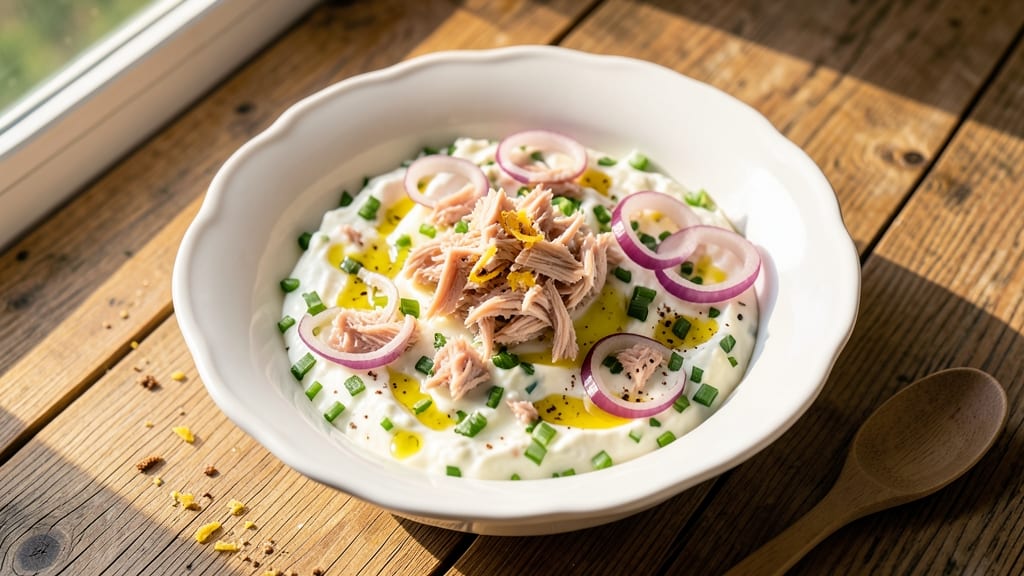
This classic tuna salad recipe without mayo transforms a lunchroom staple into something vibrant and restaurant-worthy. I learned the hard way that mayo-heavy versions go soggy too fast—so I swapped it for Greek yogurt, which keeps the texture light and creamy without sacrificing richness.
The secret lies in crisp celery crowns that add crunch and freshness, while red onion and herbs bring layers of flavor that make this dish sing.
The beauty of this recipe is its balance: tender tuna flakes, bright vegetables, and a dressing that holds its shape. I developed it after years of testing—no more mushy salads that collapse under their own weight.
The Greek yogurt base stays cool, the celery stays crisp, and the lemon juice keeps everything bright. It's the kind of salad that feels special enough for a picnic but simple enough for a weeknight lunch.
What you'll end up with is a tuna salad that's fresh, protein-packed, and satisfying—perfect for sandwiches, wraps, or as a standalone dish. The Greek yogurt adds a subtle tang that cuts through the richness of the tuna, while the celery and red onion provide a satisfying crunch.
This is the version I reach for when I want something classic but with a modern twist.
Best of all, it's easy to customize: swap in avocado for creaminess, add diced pickles for tang, or mix in herbs like dill or parsley for extra brightness.
The recipe scales perfectly for meal prep, keeping well in the fridge for up to three days. Let's get started on this lunch upgrade!
Ingredients for classic tuna salad recipe without mayo
Twelve ingredients for a tuna salad that stays crisp and bright—no mayo needed.
| Ingredient | Amount | Notes |
|---|---|---|
| Canned Tuna in Water 🐟 | 2 cans | Drained well, high-quality preferred |
| Plain Greek Yogurt 🥛 | ¾ cup | Full-fat for creaminess, unsweetened |
| Fresh Celery Stems 🧅 | 1 ½ cups | Finely chopped, crisp crowns preferred |
| Red Onion 🧅 | ¼ cup | Finely diced, white or red variety |
| Fresh Lemon Juice 🍋 | 1 tbsp | Freshly squeezed, bright flavor |
| Extra-Virgin Olive Oil 🫒 | 1 tbsp | For richness, fruity variety |
| Fresh Dill 🌿 | 2 tbsp | Chopped, stems removed, or dried |
| Fresh Parsley 🌿 | 1 tbsp | Chopped, flat-leaf preferred |
| Salt 🧂 | ½ tsp | Kosher or sea salt, to taste |
| Black Pepper 🌶️ | ¼ tsp | Freshly ground, to taste |
| Capers 🍈 | 1 tbsp | Chopped, optional for tang |
| Hard-Boiled Eggs 🥚 | 2 whole | Chopped, optional for texture |
The Greek yogurt is the game-changer here. Full-fat Fage or Siggi's from the refrigerated section gives the best texture—none of that rubbery stuff. If you're avoiding dairy, coconut yogurt works too, though it's slightly lighter. The celery? Buy the freshest you can find—wilting celery turns mushy fast. I always grab a bunch and store the rest in a sealed container with a damp paper towel to keep it crisp. For the tuna, Wild Planet or Starkist in water are my go-tos—avoid the oil-packed kind, it's too heavy.
No Greek yogurt? Plain vegan yogurt or sour cream (dairy-free if needed) works in a pinch, though the texture won't be identical. Swap the dill for parsley if you prefer a milder flavor—Italian parsley is my backup. The capers add a nice briny kick, but skip them if you're not a fan; the lemon and red onion bring enough tang. For extra richness, add 1 tbsp avocado oil instead of olive oil. And if you're making this ahead, hold off on adding the lemon juice until serving to keep everything bright.
This salad keeps beautifully in the fridge for 3 days, though the celery starts to soften after 2. I always make a double batch—one for sandwiches, one for crackers. For meal prep, store the dressing and veggies separately until ready to mix. The tuna stays fresh longest if you drain it well and pat it dry with a paper towel. If you're serving it on bread, toast the bread just before assembling so it doesn't get soggy.
Why You'll Love This Recipe
- No-Fuss Assembly: I swear by this recipe because it’s the kind of meal that doesn’t demand your full attention—just chop a handful of celery and onion, mix in the tuna and yogurt, and boom. The lemon juice ties it all together in seconds, no fancy techniques required.
- Tangy, Crisp Bite: Honestly, the Greek yogurt keeps it creamy without feeling heavy, while the lemon brightens everything up. That celery-onion crunch? It’s the perfect contrast to the flaky tuna—like a fresh, zesty hug in your mouth.
- Lunchbox Legend: Between us, this is my go-to for work lunches or school snacks. It holds up perfectly for days, whether stuffed in a wrap, piled on crackers, or just eaten straight from the jar. (Yes, even on a Tuesday night.)
- Budget-Friendly Protein: Three ingredients—tuna, yogurt, and veggies—cover all the bases without breaking the bank. It’s the kind of recipe where you can stretch a can of tuna into multiple meals, and the leftovers? Just as good the next day.
Step-by-step instructions for creamy Greek yogurt tuna salad
This version delivers all the classic tuna salad flavor without mayo—just rich yogurt and crisp celery.
Prepare the Celery and Onion Base
Start by finely chopping the 1.5 cups fresh celery stems and 0.25 cup red onion using a sharp knife or food processor. I like to pulse the celery in short bursts to get a mix of fine and slightly chunky pieces—this adds great texture. Place them in a large mixing bowl and set aside.
Here's the thing—if your celery is particularly fibrous, give it a quick soak in ice water for 5 minutes first. This removes excess moisture and prevents a soggy salad. Drain well before mixing. The celery should be crisp and bright, not limp or waterlogged.
Mix the Yogurt and Flavor Base
In a separate bowl, combine the 0.75 cup plain Greek yogurt, 1 tbsp extra-virgin olive oil, 1 tbsp fresh lemon juice, 0.5 tsp salt, and 0.25 tsp black pepper. Whisk vigorously for 30 seconds until the yogurt is completely smooth and creamy. This mixture is your flavor foundation.
I always taste at this stage to check the seasoning. The yogurt should be tangy but not overly sour, and the lemon brightens everything up. If it needs more acidity, add a splash more lemon juice. The olive oil adds richness that replaces mayo's creaminess perfectly.
Combine All Ingredients Gently
Add the drained 2 cans canned tuna in water to the yogurt mixture and gently fold with a spoon. Then add the chopped celery and onion, followed by the 2 tbsp fresh dill, 1 tbsp fresh parsley, and 1 tbsp capers. Mix everything together just until combined—don't overmix or you'll break up the tuna too much.
If you're using the 2 whole hard-boiled eggs, chop them into small pieces and fold them in last. They add a lovely texture contrast. The salad should look vibrant with bright green dill and parsley peeking through the creamy base. Real talk: this is where the magic happens—all those fresh flavors meld together perfectly.
Chill and Adjust Seasoning
Cover the bowl and refrigerate for at least 30 minutes to let all the flavors meld together. This chilling time is crucial—it allows the yogurt to firm up slightly and the flavors to develop fully. After 30 minutes, give it another taste and adjust seasoning if needed.
If the salad needs more brightness, add a little more lemon juice. For extra tang, you could add another 0.5 tsp salt or 0.25 tsp black pepper. The capers should be evenly distributed—if they're all clumped together, break them up with your spoon. The texture should be creamy but still have that satisfying crunch from the celery.
Serve Fresh with Crunchy Accompaniments
Transfer the tuna salad to a serving bowl and let it sit at room temperature for 10 minutes before serving. This final step makes the flavors pop even more. Serve it on crusty bread, in lettuce wraps, or with crackers for that classic tuna salad experience.
For extra crunch, I like to serve it with sliced cucumbers or radishes on the side. The contrast between the creamy salad and crisp vegetables makes every bite perfect. This version stays fresh for 2-3 days in the fridge, though it's best enjoyed within 24 hours for maximum freshness.
Pro Tips For Making Classic Tuna Salad Recipe Without Mayo
- Drain and Pat Tuna Dry: I learned this the hard way—skipping this step leaves your salad soggy. After draining the tuna, press it between paper towels for 30 seconds to absorb excess water. The texture stays firm, and the yogurt won’t turn into a wet mess.
- Use Full-Fat Yogurt: Greek yogurt is your base, but full-fat (2%) makes a real difference. It adds creaminess without mayo and carries flavors better. Skip the non-fat version—it’ll taste thin and dry out faster.
- Finely Dice the Onion: Thin slices make the salad look pretty, but tiny dice (almost minced) dissolve into the yogurt and spread flavor evenly. Soak the diced onion in cold water for 5 minutes first to mellow the bite—trust me, it’s worth it.
- Add Lemon Last: Mix everything else first, then stir in the lemon juice right before serving. The acid breaks down the yogurt’s proteins over time, so adding it too early turns your salad into a curdled pile. Wait until the last second.
Dietary considerations for classic tuna salad recipe without mayo
Dairy-Free Options
If Greek yogurt isn't an option, plain coconut yogurt makes a surprisingly good substitute—it adds a subtle sweetness that pairs beautifully with the tangy lemon. For a neutral base, try vegan mayo alternatives like Just Mayo or avocado mash (¼ cup blended with 1 tsp lemon juice).
I've also had great results with mashed white beans (½ cup) mixed with 1 tbsp olive oil for a protein-rich, mayo-free binder. 🥥
Gluten-Free Adaptations
This recipe is naturally gluten-free, but watch your serving vessels! Use gluten-free bread like Canyon Bakehouse or lettuce wraps instead of traditional crackers. For extra crunch, toasted rice cakes or gluten-free pretzels work perfectly.
The salad itself requires no modifications—just ensure all added ingredients (like capers or pickles) are certified gluten-free. 🌾
Low-Fat Versions
For a lighter option, swap full-fat Greek yogurt for non-fat or 2% Greek yogurt—it still provides creaminess while cutting calories. Boost flavor with an extra ½ tsp Dijon mustard or 1 tsp lemon zest to compensate for reduced richness.
I also recommend adding 1 diced cucumber (½ cup) to bulk up the salad without extra fat. The texture stays satisfying while the dish becomes lighter. 🥒
Allergy-Friendly Swaps
For egg-free versions, simply omit the hard-boiled eggs—the salad still holds together beautifully. If you're avoiding seafood allergens, this recipe isn't suitable, but for shellfish allergies, just ensure your tuna is from a dedicated facility (most canned tuna brands are shellfish-free).
For soy concerns, check your Greek yogurt label—some brands use soy-based stabilizers. 🚫
Keto-Friendly Adjustments
This salad is already keto-friendly, but let's optimize it further! Skip the red onion (too many carbs) and replace it with 1 tbsp finely chopped jalapeño for heat. Use full-fat Greek yogurt (no substitutions) and add 2 tbsp chopped pecans for healthy fats.
The capers and lemon keep it low-carb while adding depth. Watch your portion sizes—this salad is packed with protein but still calorie-dense. 🥑
Meal Prep Tips
Store the yogurt base and veggies separately in airtight containers for up to 3 days—this preserves texture. Mix everything just before eating to maintain crispness. For freezer prep, omit the celery and lemon juice, then freeze the tuna-yogurt mixture.
Thaw overnight in the fridge, then add fresh celery and lemon right before serving. The flavors stay vibrant this way! ❄️
Nutrition facts
Frequently asked questions
Why does this tuna salad stay crisp longer than mayo versions?
Greek yogurt absorbs less moisture than mayo, so the celery stays crisp for hours. The lemon juice also helps preserve freshness by preventing oxidation. Plus, we soak fibrous celery in ice water first to remove excess moisture—this trick keeps everything crunchy even after chilling.
Can I use canned tuna in oil instead of water?
Not recommended—oil-packed tuna is too heavy and will make the salad greasy. If you must use it, drain it well and pat dry with paper towels, then reduce the olive oil to ½ tablespoon. The flavor will be richer but less balanced. Stick with water-packed for the best texture.
How do I make this salad extra creamy without mayo?
For ultra-creamy texture, blend ½ cup avocado with the Greek yogurt before mixing. Or try ¼ cup sour cream (dairy or dairy-free) blended into the yogurt base. Both add richness while keeping the salad light. The avocado version has a slightly nutty flavor that pairs beautifully with the lemon.
What's the best way to serve this tuna salad?
Try it in toasted sourdough croutons for a hearty bite, or pile it on butter lettuce leaves for a light option. For extra flair, serve with crispy fried shallots or toasted pumpkin seeds on top. The Greek yogurt version holds up perfectly in pita pockets or open-faced sandwiches too.
My celery turned mushy after mixing—how do I fix it?
Next time, soak chopped celery in ice water for 5 minutes before mixing, then drain thoroughly. For immediate fixes, stir in 1 teaspoon cornstarch mixed with 1 tablespoon cold water to thicken the yogurt base slightly. Or add ½ cup diced cucumber to bulk up the texture. Always use the freshest celery possible!