
Salads
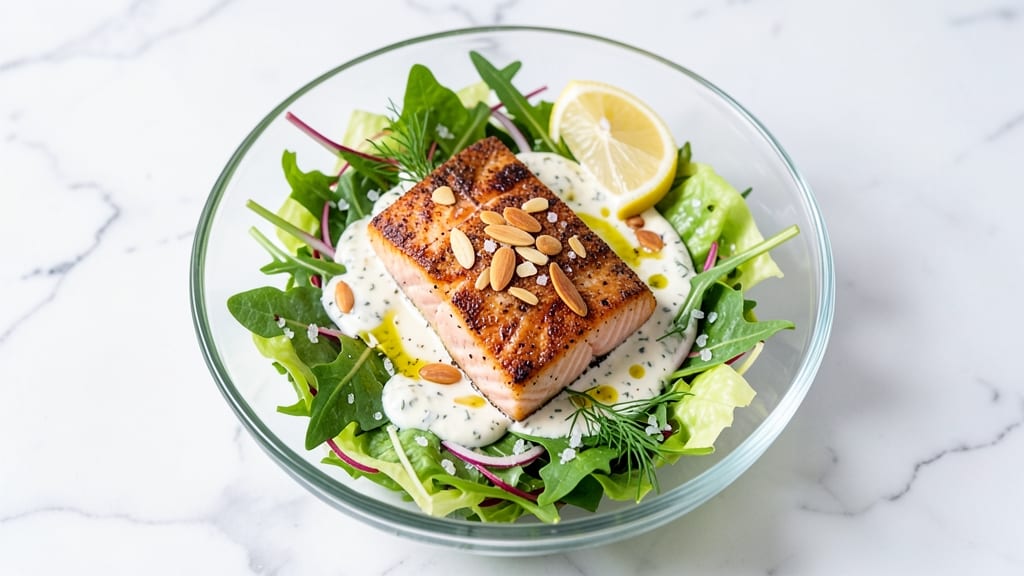
This Cheesecake Factory almond-crusted salmon salad delivers the perfect balance of restaurant-quality flavors at home. The crispy almond crust on perfectly cooked salmon meets a light, herb-infused salad base, creating a dish that's both elegant and satisfying.
I've replicated the signature texture and flavor profile that makes this menu item so popular, ensuring every bite delivers that satisfying crunch and tender salmon experience.
The secret to achieving that signature crispy topping lies in the almond crust preparation—finely ground almonds mixed with herbs and a touch of lemon zest create a delicate yet sturdy coating that stays crispy even when tossed with the salad.
The salmon cooks just enough to maintain its moisture while developing a golden, almond-encrusted exterior that shatters with each bite. This technique transforms a simple piece of fish into something truly special, worthy of any dinner table.
What you'll end up with is a visually stunning salad that's as beautiful as it is delicious. The crispy almond-crusted salmon sits atop a bed of fresh greens, complemented by bright citrus dressing and a medley of fresh vegetables.
The flavor balance is precise—rich, nutty almond crust meets fresh, zesty herbs and the delicate sweetness of the salmon, creating a harmonious bite that's both comforting and refined.
This recipe is perfect for weeknight dinners or special occasions, offering a restaurant-quality experience without the fuss. The preparation is straightforward, yet the results are impressive enough to serve for guests. Let's create this elegant yet approachable dish that captures the essence of the Cheesecake Factory's signature style.
Ingredients for cheesecake factory almond crusted salmon salad
The key to replicating this signature dish lies in these carefully selected, restaurant-quality ingredients.
| Ingredient | Amount | Notes |
|---|---|---|
| Center-Cut Salmon Fillets 🐟 | 1 ½ lb | Skin-on, even thickness preferred |
| Blanched Almonds 🥜 | 1 ½ cups | Finely ground into meal texture |
| Extra-Virgin Olive Oil 🫒 | ¼ cup | Light variety for delicate flavor |
| Fresh Lemon Zest 🍋 | 1 tbsp | From organic lemons preferred |
| Fresh Dill 🌿 | ¼ cup | Chopped finely for herb infusion |
| Fresh Parsley 🌿 | ¼ cup | Chopped finely for freshness |
| Garlic Cloves 🧄 | 4 cloves | Minced for aromatic base |
| Diamond Crystal Kosher Salt 🧂 | 1 ½ tsp | For seasoning and crust |
| Freshly Ground Black Pepper 🌶️ | ½ tsp | For subtle seasoning |
| Baby Spinach 🍃 | 6 cups | Fresh, for crisp salad base |
| Cherry Tomatoes 🍅 | 1 cup | Halved for vibrant color |
| Red Onion 🧅 | ¼ cup | Thinly sliced for crunch |
| Extra-Firm Tofu 🥬 | ½ cup | Crumbled for protein boost |
| Balsamic Vinegar 🍷 | 2 tbsp | For citrus dressing |
| Honey 🍯 | 1 tbsp | For dressing sweetness |
The salmon selection is critical—center-cut fillets with even thickness ensure consistent cooking. Whole Foods or Trader Joe's carry excellent options, or ask your fishmonger for fillets cut from the center of the salmon. The almonds should be blanched and finely ground; Trader Joe's sells pre-ground almond meal, but for optimal texture, pulse them in a food processor until you achieve a fine, flour-like consistency. Fresh herbs are non-negotiable here—their vibrant flavors are essential to the dish's signature freshness. If you're using dried herbs, reduce to one-third the amount, but fresh dill and parsley provide that restaurant-quality brightness that sets this dish apart.
No blanched almonds? Toast regular whole almonds for 5 minutes at 350°F, then pulse in a food processor until finely ground. Substitute honey with agave nectar for a vegan option, though the flavor profile will differ slightly. For the dressing, if you prefer a tangier taste, increase the balsamic vinegar by 1 teaspoon. The tofu can be omitted entirely for a lighter salad, but it adds a satisfying protein element that complements the rich salmon. Cherry tomatoes should be firm and vibrant—avoid those that feel mushy or overly soft, as they'll detract from the dish's freshness. The red onion adds a subtle crunch and sharpness that balances the richness of the salmon and almond crust.
Salmon should be used within 2 days of purchase for optimal freshness; store it in the coldest part of your fridge, wrapped in a paper towel. The almond meal and herbs can be prepped ahead and stored in airtight containers in the refrigerator for up to 5 days. The dressing ingredients keep well in the pantry, but the honey and balsamic vinegar should be stored separately until ready to combine. This salad holds up beautifully for 2 days in the fridge, though the almond crust will lose some of its crispness. For best results, assemble the salad just before serving to maintain the freshness of the greens and the crunch of the almond topping.
Why You'll Love This Recipe
- No-Fuss Assembly: The salmon just needs a quick sear and a sprinkle of those buttery almonds—no breading, no fuss. Honestly, I’ve made this while waiting for dinner guests, and the only real work is cracking eggs (which I do while chatting).
- Crunchy-Creamy Magic: That almond crust turns shatteringly crisp while the inside stays tender, and the lemon zest? It brightens every bite like a little sunburst. Between us, the dill ties it all together—fresh, herby, and impossible to resist.
- Lunch or Dinner: Pack it for work (the almonds stay crunchy all day), serve it over greens for a light dinner, or even pile it onto toast for brunch. I’ve eaten this cold, room temp, and reheated—it’s always a win.
- Leftovers That Don’t Suck: Unlike most salmon dishes, this actually tastes better the next day. The almonds soften just enough to get buttery, and the lemon keeps it from going fishy. (Yes, even on a Tuesday night.)
Step-by-step instructions for Cheesecake Factory-inspired almond-crusted salmon salad
Here's how to create that signature crispy almond crust and vibrant herb salad—just like the restaurant version.
Create the Almond Crust Mixture
In a food processor, pulse the 1.5 cups blanched almonds until they form a fine meal texture—this should take about 30 seconds. Transfer the almond meal to a mixing bowl and add 0.25 cup extra-virgin olive oil, 1 tbsp fresh lemon zest, 1.5 tsp diamond crystal kosher salt, and 0.5 tsp freshly ground black pepper. Mix thoroughly until the almonds are evenly coated and the mixture holds together when pressed.
This texture is crucial—it should be like wet sand that clings when you press it. If it's too dry, add 1 tsp extra olive oil; if too wet, sprinkle in 1 tsp more almond meal. The crust needs to adhere perfectly to the salmon for that signature crispiness.
Prepare the Salmon for Crispy Perfection
Pat the 1.5 lb center-cut salmon fillets completely dry with paper towels—this is non-negotiable for crispy skin. Place the salmon on a wire rack set over a baking sheet (this allows air circulation on all sides). Spread the almond mixture evenly over each fillet, pressing gently to ensure full coverage. Let the salmon rest at room temperature for 15 minutes while you prepare the rest of the components.
Don't skip the resting time—it allows the almond crust to adhere better and ensures even cooking. The skin-on fillets will help create that crispy exterior while keeping the inside tender. Preheat your oven to 400°F while you work on the salad base.
Assemble the Herb Salad Base
In a large bowl, combine the 6 cups baby spinach, 1 cup halved cherry tomatoes, 0.25 cup thinly sliced red onion, and 0.5 cup crumbled extra-firm tofu. Gently toss everything together with your hands—just enough to distribute the ingredients evenly. The spinach should still look vibrant and fresh, not wilted.
For the dressing, whisk together 2 tbsp balsamic vinegar, 1 tbsp honey, 4 minced garlic cloves, 0.25 cup chopped fresh dill, and 0.25 cup chopped fresh parsley. Drizzle this dressing over the salad just before serving to maintain maximum freshness and prevent the greens from becoming soggy.
Bake the Almond-Crusted Salmon
Bake the salmon on the middle rack for 12-15 minutes until the internal temperature reaches 145°F and the almond crust is deep golden brown with crispy edges. You'll see the crust puff slightly and develop a beautiful caramelized color—this is your signal it's ready. Be careful not to overbake; salmon continues cooking slightly after removal from the oven.
While the salmon bakes, keep the salad components separate until the very last moment. The residual heat from the salmon will help warm the dressing slightly when combined, enhancing all the flavors. Let the salmon rest for 5 minutes before serving to allow the juices to redistribute.
Plate and Serve with Restaurant-Style Presentation
Slice the salmon into 1-inch thick portions and arrange two pieces per serving over the herb salad base. Drizzle with any remaining dressing and garnish with additional fresh parsley and lemon zest for that final touch of elegance. The contrast between the crispy almond crust, tender salmon, and fresh salad creates a perfect balance of textures and flavors.
Serve immediately while the almond crust is still crispy and the salmon is warm. Each bite should deliver that satisfying crunch followed by perfectly cooked salmon and bright herb salad. The key to success lies in the precise timing—especially that crispy crust, which should maintain its texture until the very last bite.
Pro Tips For Making Cheesecake Factory Almond Crusted Salmon Salad
- PAT THE SALMON DRY: The almond crust needs grip, not a swim. Use paper towels to blot the fillets thoroughly—I mean, no wet spots—before pressing them into the almond mix. Moisture is the enemy of crispy crusts, and this is where most home cooks drop the ball.
- TOAST ALMONDS LOW: Skip the high-heat blitz that turns them into charcoal. Toast blanched almonds in a dry pan over medium-low until they’re golden and smell nutty—about 3-4 minutes. Burnt almonds taste bitter, and nobody wants that competing with your salmon.
- PRESS CRUST FIRM: Don’t just sprinkle almonds on top like confetti. Pack the mix hard onto the salmon—press it down with your palm or the back of a spoon—so it sticks and crisps. I learned this after my first batch fell apart when flipping.
- LEMON ZEST NOW: Add fresh lemon zest right after cooking, not before. The heat releases oils that make the zest turn bitter if mixed in early. A quick sprinkle at the end keeps the bright, citrusy punch sharp—just like the Cheesecake Factory version.
Pro cooking tips for great cheesecake factory almond crusted salmon salad
Almond Crust Texture Secrets
The magic happens in the almond crust's texture—it needs to be fine enough to stick but coarse enough to crisp. Pulse blanched almonds in a food processor until they resemble fine sand (about 30 seconds).
If using whole almonds, toast them first at 350°F for 5 minutes to enhance flavor. The key ratio is 1.5 cups almond meal to 0.25 cup olive oil—this creates the perfect adhesive consistency. 🥜
Salmon Prep Essentials
Never skip patting the salmon completely dry with paper towels—moisture prevents crispy skin. Use center-cut fillets with skin for better texture, and let them rest at room temperature for 15 minutes before baking.
This step ensures even cooking and maximum crust adhesion. Preheat your oven to 400°F while prepping the rest—timing is everything for that signature golden crust. 🐟
Baking Temperature Precision
Bake the salmon at 400°F for 12-15 minutes until the internal temperature hits 145°F. The crust should be deep golden brown with crispy edges—this means the almonds have caramelized perfectly.
Use a wire rack over a baking sheet for even air circulation, which prevents soggy crust. Overbaking by even 1 minute can turn crispy into crumbly. ⏱️
Salad Freshness Strategy
Keep the salad components separate until the very last moment to maintain crispness. Toss the greens gently with your hands—just enough to combine, not enough to bruise. The dressing should be made fresh and drizzled right before serving to prevent soggy spinach.
For extra crunch, add thinly sliced radishes or toasted almond slivers as a garnish. 🌿
Resting for Perfect Results
Let the salmon rest for 5 minutes after baking—this allows the juices to redistribute, ensuring each bite stays moist. The almond crust will maintain its crispiness during this time.
Slice the salmon into 1-inch thick portions before plating to showcase the beautiful crust. The contrast between warm salmon and fresh salad creates the perfect bite. 💫
Plating Like a Pro
Arrange two salmon pieces per serving over the salad base for an elegant presentation. Drizzle with remaining dressing and garnish with fresh parsley and lemon zest for that restaurant-quality finish.
The visual contrast between the golden crust and vibrant greens makes this dish irresistible. Serve immediately while the crust is at its crispy best. ✨
Nutrition facts
Frequently asked questions
Why does the almond crust need to be so finely ground?
The fine texture creates the perfect balance of adhesion and crispiness. When ground to a sand-like consistency, the almond meal clings to the salmon skin while developing that signature golden crust. Too coarse, and it won't stick properly; too fine, and it may become pasty. The 30-second pulse in the food processor achieves this ideal texture.
Can I make this recipe without a food processor?
Yes, but with adjustments! Pulse whole almonds in a high-powered blender or grind them in a spice grinder until fine. For a hands-on method, toast 1.5 cups whole almonds at 350°F for 5 minutes, then place them in a ziplock bag and crush with a rolling pin until you achieve a meal-like texture. The flavor will be slightly less refined but still delicious.
How do I keep the almond crust crispy when serving?
Serve the salmon immediately after baking while the crust is at its peak crispiness. If you must reheat leftovers, place the salmon on a wire rack in a 375°F oven for 3-5 minutes—this prevents sogginess. For the salad, keep dressing separate and add it tableside to maintain freshness. The crust will lose crispness after 2 hours at room temperature.
What's the best way to store leftovers?
Store the salmon and salad components separately in airtight containers. The salmon keeps well in the fridge for 2 days (wrap tightly in foil to preserve crispness), while the salad greens stay fresh for 1 day. Reheat only the salmon portion as needed—never the entire salad. For longer storage, freeze the salmon (without the crust) for up to 1 month and thaw overnight in the fridge.
Can I substitute the tofu for another protein?
For a lighter option, omit the tofu entirely. For extra protein, try crumbled feta cheese (adds tangy flavor) or chickpeas (for a heartier texture). If using feta, reduce the balsamic vinegar in the dressing by 1 teaspoon to balance the saltiness. The tofu's mild flavor makes it a neutral base that complements all salad components.