Sauces & Condiments
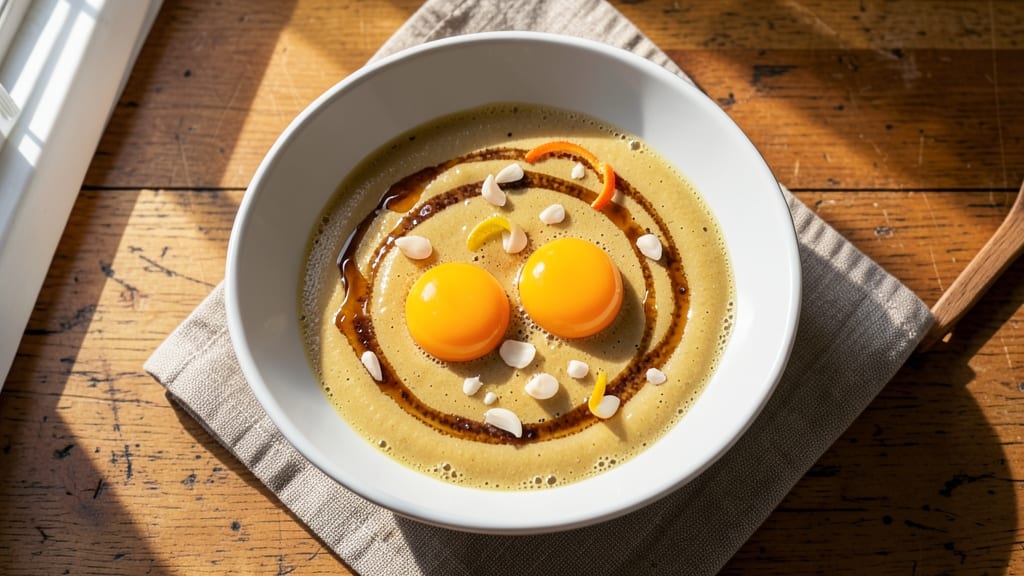
This cesar salad sauce recipe transforms simple Caesar salad into a restaurant-worthy dish with its rich, tangy depth. The secret lies in balancing salty anchovies, sharp Parmesan, and a perfectly emulsified base that coats every leaf without weighing it down.
I've refined this recipe over years of testing—no lumps, no separation, just velvety smoothness that clings to greens like a second skin.
The foundation starts with a foolproof emulsion technique: whisking egg yolks with Dijon mustard and Worcestershire sauce creates the binding agent, while garlic and lemon juice add brightness. Anchovies dissolve into the mix, infusing umami without overpowering, while Parmesan contributes that signature nutty sharpness.
A slow stream of olive oil, whisked constantly, transforms the mixture into a glossy, clingy sauce that elevates Caesar salad from ordinary to extraordinary.
What you'll achieve is a creamy yet light sauce with perfect balance—tangy, savory, and just slightly funky from the anchovies. The emulsion stays stable for days, making it ideal for meal prep, and the flavor deepens as it sits.
This isn't just dressing; it's the backbone of a classic, a sauce so good it deserves its own spotlight.
For those who prefer plant-based options, I'll share adaptations in the variations section—but the traditional version, with its anchovy depth and Parmesan richness, remains unmatched. Let's make this sauce, the kind that turns a simple salad into a showstopper.
Ingredients for cesar salad sauce
Nine ingredients, one perfect emulsion—this sauce transforms Caesar salad into a restaurant-worthy experience.
| Ingredient | Amount | Notes |
|---|---|---|
| Large Egg Yolks 🥚 | 3 whole | Fresh, room temperature preferred |
| Dijon Mustard 🍯 | 1 tbsp | High-quality, smooth variety |
| Worcestershire Sauce 🍶 | 1 tbsp | Traditional, anchovy-based version |
| Anchovy Fillets 🐟 | 4 whole | High-quality, rinsed and drained |
| Garlic Cloves 🧄 | 2 cloves | Fresh, minced to fine paste |
| Fresh Lemon Juice 🍋 | 1 tbsp | Bright, freshly squeezed |
| Parmesan Cheese 🧀 | 1 cup | Freshly grated, fine grade |
| Extra-Virgin Olive Oil 🫒 | 1 cup | High-quality, fruity variety |
| Kosher Salt 🧂 | ½ tsp | Diamond Crystal preferred |
| Black Pepper 🌶️ | ¼ tsp | Freshly ground, coarse grind |
The foundation begins with egg yolks—freshness is critical here, as they provide the emulsion's structure. Anchovy fillets from 365 by Whole Foods or Cavanagh's deliver the signature umami depth without overpowering; avoid canned anchovies, which often contain fillers. Parmesan cheese must be freshly grated from a block—pre-grated contains anti-caking agents that disrupt the sauce's texture. For garlic, peel and mince finely using a microplane for consistent texture, and toast the minced garlic in olive oil for 30 seconds to deepen its flavor. The Dijon mustard should be smooth, not grainy, and the Worcestershire sauce must be traditional (some brands contain vinegar or sugar, which can destabilize the emulsion).
No anchovies? High-quality fish sauce at half the amount provides umami, though the flavor profile will shift slightly. Substituting nutritional yeast for Parmesan yields a vegan version, but the texture will be lighter. Olive oil quality is non-negotiable—use a fruity, extra-virgin variety with at least 70% oleic acid; California Olive Ranch or Colavita are reliable choices. If your sauce breaks during emulsification, whisk in 1 tsp of warm water to rebind the mixture. For a smoother texture, strain through a fine-mesh sieve before serving, though purists argue this removes desirable texture.
Store the sauce in an airtight glass jar with a thin layer of olive oil on top to preserve freshness. It remains stable in the fridge for up to 5 days, though flavor deepens after 24 hours. For longer storage, freeze in ice cube trays—each cube makes one serving. To prevent separation, gently whisk before use. If the sauce thickens upon reheating, thin with 1 tsp of warm water or lemon juice. This emulsion is designed for meal prep, so double the batch—it's worth the effort to keep a jar on hand for spontaneous salads.
Why You'll Love This Recipe
- Five-Ingredient Magic: I swear by this sauce—just yolks, mustard, Worcestershire, anchovies, and garlic. That’s it. No measuring cups, no fancy gadgets, just a bowl and a whisk. Honestly, if I can make it while chatting on the phone, anyone can.
- Umami Bomb: The anchovies and Worcestershire pack a punch—salty, savory, and a little funky. Between us, that’s the secret: skip the bottled dressing, and you’ll taste the difference. The garlic? Oh, it’s there, but it melts into something richer than raw.
- Weeknight Superstar: This sauce keeps for days in the fridge, so I make a batch on Sunday and toss it on salads, eggs, or even grilled chicken all week. No last-minute shopping, no stress. Just open the jar, mix it up, and go.
- Budget Game-Changer: Anchovies and egg yolks stretch this sauce farther than store-bought. I use it for everything—dressing, marinade, even a quick dip—and it costs a fraction. That’s flavor without the grocery bill shock. (Yes, even on a Tuesday night.)
Step-by-step instructions for bold anchovy and Parmesan emulsion
This emulsion delivers restaurant-quality depth with a perfectly balanced, velvety texture every time.
Create the Anchovy-Garlic Base
In a small saucepan, combine the 4 whole anchovy fillets, 2 cloves minced garlic, and 1 tablespoon Worcestershire sauce. Heat over low heat for 2-3 minutes, stirring constantly, until the anchovies dissolve completely and the mixture becomes a smooth, salty paste. You'll see the oil begin to separate slightly—this is normal and actually enhances the flavor.
Remove from heat immediately to prevent the garlic from burning. The base should have a deep umami richness with no visible anchovy pieces remaining. If you notice any chunks, strain through a fine-mesh sieve to ensure a silky texture. Let this mixture cool completely before proceeding—this prevents the egg yolks from scrambling when combined.
Whisk the Emulsifying Agents
In a separate bowl, whisk together the 3 whole large egg yolks until they're pale and slightly thickened. Add the 1 tablespoon Dijon mustard and whisk vigorously for 30 seconds until fully incorporated. This step is critical—it creates a stable emulsion that will bind the oil later. The mustard also adds subtle tang that balances the richness.
Gradually whisk in the cooled anchovy mixture, then add the 1 cup freshly grated Parmesan cheese and 1 tablespoon fresh lemon juice. The cheese should melt slightly into the mixture, creating a thick, creamy paste. Add the 0.5 teaspoon kosher salt and 0.25 teaspoon black pepper, whisking until evenly distributed. The sauce should now have a smooth, homogenous texture with no visible cheese granules.
Gradually Incorporate the Olive Oil
With the mixture still in the bowl, begin adding the 1 cup extra-virgin olive oil in a very slow, steady stream. Use a whisk in one hand while pouring the oil with the other, maintaining a constant drizzle. This gradual incorporation is what creates the stable emulsion—adding oil too quickly will cause the sauce to break and separate.
Whisk continuously for 3-5 minutes until the sauce thickens noticeably and coats the back of a spoon. You'll know it's properly emulsified when it holds its shape when drizzled. If it starts to look too thick, add 1-2 teaspoons of warm water to adjust the consistency. The final texture should be velvety yet pourable, with a glossy sheen that indicates proper emulsification.
Refine and Adjust Seasoning
Transfer the sauce to a clean jar or container and let it rest at room temperature for 10-15 minutes. This resting period allows the flavors to meld and any slight separation to re-emulsify. Taste and adjust seasoning if needed—you may need to add a pinch more salt or a splash of lemon juice to balance the flavors.
The sauce should have a perfect harmony of salty, umami, tangy, and creamy notes. If properly emulsified, it will cling to salad greens beautifully without pooling at the bottom. For best results, use the sauce within 2-3 days when stored in the refrigerator, though the flavor continues to develop over time.
Pro Tips For Making Cesar Salad Sauce
- Temper the yolks: Whisk them in a heatproof bowl over barely simmering water—no boiling—while stirring constantly. I learned this the hard way when I rushed it and ended up with scrambled eggs instead of silky sauce. Keep the water just below a gentle shimmer, and you’ll get that perfect, velvety texture without breaking a sweat.
- Mince anchovies finely: Don’t just chop them—mash them into a paste with the back of your knife or a fork. That way, they dissolve smoothly into the sauce instead of leaving gritty bits. I used to skip this, and the sauce always tasted uneven.
- Toast the garlic: Sauté the minced garlic in the oil until it’s golden, not just fragrant. Overcooking turns it bitter, but a deep, nutty color means richer flavor. Do this before adding the yolks—it’s the base of everything.
- Thin gradually: Start with just the mustard and Worcestershire, then drizzle in lemon juice or water after the sauce is emulsified. Adding liquid too early breaks the emulsion, and you’ll end up with a sad, separated mess. Patience here saves cleanup later.
Pro cooking tips for cesar salad sauce
Emulsion Perfection
Mastering the emulsion is where this sauce shines. The key is slow, steady whisking while adding the olive oil—think of it like a dance between the oil and the yolk mixture.
I use a Balloon Whisk (the kind with a long handle) because it creates more air, helping the sauce hold its shape. Start with the oil at room temperature—cold oil can cause the emulsion to break immediately.
If your sauce starts to separate, don’t panic: just whisk in 1 teaspoon of warm water and keep going. The magic happens when the sauce thickens enough to coat the back of a spoon like a glossy film. 💫
Anchovy Technique
Anchovies are the soul of this sauce, but handling them wrong can ruin everything. Rinse and drain the fillets first to remove excess salt, then mince them finely with a knife or pulse in a food processor.
Heat them gently with the garlic and Worcestershire—never boil, or they’ll turn bitter. Let the mixture cool completely before mixing with the yolks, or you’ll scramble them. I like to strain the anchovy paste through a fine-mesh sieve afterward for ultra-smooth texture.
This step makes all the difference in the final flavor. 🐟
Parmesan Prep
Freshly grated Parmesan is non-negotiable here. Pre-grated cheese contains anti-caking agents that prevent proper emulsification. Use a microplane or a box grater with large holes for the finest, most flavorful results. Grate the cheese right before mixing to avoid clumping.
If your sauce feels too thick after adding the Parmesan, whisk in 1-2 teaspoons of warm water to loosen it up. The cheese should melt into the sauce smoothly, adding that signature nutty depth without graininess. 🧀
Oil Infusion
The olive oil is where the sauce either succeeds or fails. Extra-virgin olive oil with high oleic acid content (like California Olive Ranch) works best—cheaper oils can cause the emulsion to break.
Add the oil drop by drop at first, then gradually increase to a slow stream while whisking vigorously. If the sauce looks curdled, stop immediately and whisk in 1 teaspoon of lemon juice to stabilize it.
The goal is a velvety, pourable consistency that clings to greens like a second skin. 🫒
Resting Matters
Never skip the 10-15 minute rest after emulsifying. This lets the flavors meld and any slight separation re-emulsify naturally. I like to store the sauce in a clean glass jar with a tight-sealing lid, then let it sit at room temperature.
Taste it again after resting—you might need to adjust the seasoning slightly. The sauce will thicken as it cools, so if it’s too stiff, whisk in 1 teaspoon of warm water to bring it back to perfection. Patience here pays off in the final result. ⏳
Troubleshooting Tips
If your sauce breaks, don’t toss it—rebind it! Whisk in 1 teaspoon of warm water or lemon juice and keep whisking. For a smoother texture, strain through a fine-mesh sieve before serving, though purists argue this removes desirable texture.
If the sauce is too thick, thin it with warm water or lemon juice. Too thin? Whisk in 1 teaspoon of Dijon mustard to tighten it up. The key is to stay calm and keep whisking—this sauce is forgiving if you troubleshoot quickly. 💪
Nutrition facts
Frequently asked questions
Why does my Caesar dressing always separate?
The most common cause is adding oil too quickly or using cold ingredients. Always whisk in olive oil very slowly while maintaining constant motion. Cold egg yolks or oil can destabilize the emulsion—use room-temperature ingredients. If it separates, whisk in 1 teaspoon of warm water or lemon juice to rebind it. The key is patience and steady whisking!
Can I make this sauce without anchovies?
Yes! For a vegetarian version, replace the anchovies with 1 tablespoon of fish sauce or 2 teaspoons of nutritional yeast plus 1/2 teaspoon of soy sauce. The umami depth will be different but still delicious. For vegan, use 1 tablespoon of white miso paste instead. Just remember these substitutions will alter the traditional flavor profile.
How do I prevent my dressing from getting too thick?
If your sauce thickens too much, simply whisk in 1-2 teaspoons of warm water or lemon juice to adjust the consistency. For prevention, don't over-whisk after adding the oil—just until it's properly emulsified. The sauce will naturally thicken as it cools, so start slightly thinner if you prefer a pourable dressing. Always taste as you go!
What's the best way to store leftover Caesar dressing?
Store in an airtight glass jar in the fridge for up to 5 days. For longer storage, freeze in ice cube trays—each cube makes one serving. Always whisk before using to re-emulsify. If the sauce thickens upon reheating, thin with 1 teaspoon of warm water. The flavor actually improves after 24 hours of resting!
Can I make this sauce without raw egg yolks?
Yes! For a safer version, use pasteurized egg yolks (available at most grocery stores) or substitute with 1/4 cup of mayonnaise (vegan mayo for plant-based). The emulsion will be slightly less stable but still delicious. For a completely egg-free version, blend 1/4 cup of silken tofu with 1 teaspoon of lemon juice until smooth, then use as your base.