Salads
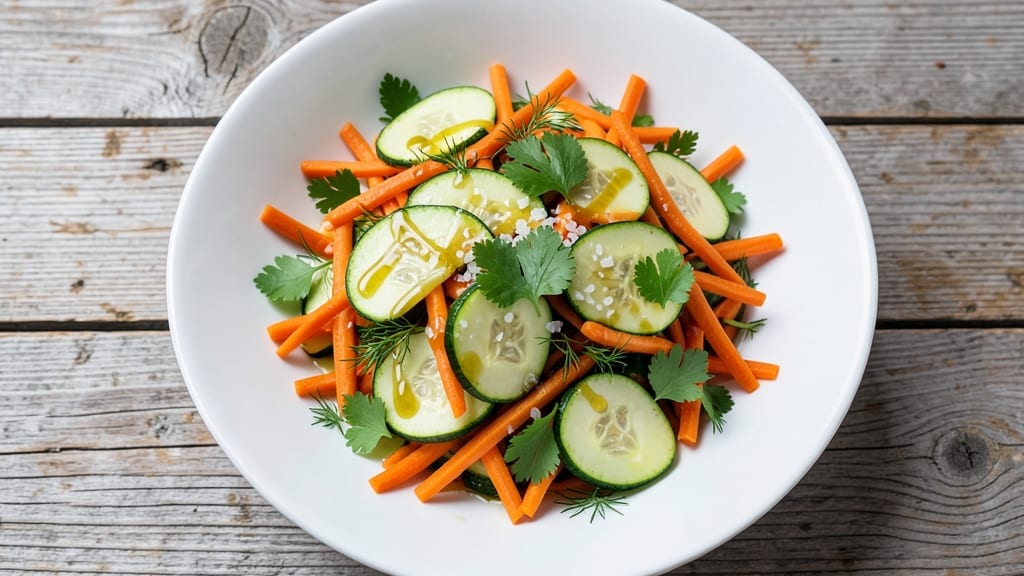
This carrot zucchini salad recipe transforms simple vegetables into a vibrant, textured dish that stays crisp even after mixing. The secret lies in precise slicing techniques and a bright herb dressing that enhances natural sweetness without overpowering it.
I developed this recipe after realizing most carrot-zucchini salads turn soggy within hours—this version maintains its satisfying crunch for up to 24 hours when stored properly.
What makes this salad special is the perfect balance of textures and flavors: thinly shaved carrots add natural sweetness, julienned zucchini provides freshness, and toasted nuts or seeds contribute satisfying crunch. The dressing—a simple combination of lemon, olive oil, and fresh herbs—binds everything together while keeping the vegetables vibrant.
This recipe serves as both a refreshing side dish and a satisfying main course when paired with protein.
The preparation is straightforward yet precise: we'll use a mandoline for even vegetable slices and a whisk for perfectly emulsified dressing. The result is a salad that's visually stunning with its bright colors and appealing texture contrast, while delivering a flavor profile that's fresh, slightly tangy, and subtly sweet.
The optional variations allow you to customize it based on dietary preferences or ingredient availability.
Perfect for summer gatherings, picnic lunches, or as a light dinner option, this salad comes together in just 15 minutes with ingredients you likely already have on hand.
The recipe scales easily to serve a crowd, making it ideal for potlucks or meal prep. Let's create a salad that's as nutritious as it is delicious.
Ingredients for carrot zucchini salad
Bright vegetables and a precise herb dressing keep this salad vibrant and crisp for hours.
| Ingredient | Amount | Notes |
|---|---|---|
| Medium Carrots 🥕 | 4 whole | Organic preferred, peeled |
| Medium Zucchini 🥒 | 2 whole | Young, firm varieties |
| Extra-Virgin Olive Oil 🫒 | ½ cup | High-quality, fruity |
| Fresh Lemon Juice 🍋 | 3 tbsp | Freshly squeezed |
| Fresh Flat-Leaf Parsley 🌿 | ½ cup | Finely chopped |
| Fresh Dill 🌿 | ¼ cup | Finely chopped |
| Pumpkin Seeds 🥜 | ¼ cup | Toasted, unsalted |
| Dijon Mustard 🍯 | 1 tsp | Mild variety preferred |
| Honey 🍯 | 1 tbsp | Raw preferred |
| Sea Salt 🧂 | ½ tsp | Fine grain preferred |
| Freshly Ground Black Pepper 🌶️ | ¼ tsp | Freshly ground |
| Apple Cider Vinegar 🍶 | 1 tsp | For tangy depth |
The carrots and zucchini are the foundation—organic varieties have better flavor and texture. Whole Foods or local farmers markets offer the freshest produce, but any grocery store's pre-washed section works. Look for carrots with vibrant orange color and zucchini that's firm to the touch. A mandoline slicer ensures even, paper-thin slices that stay crisp. For the herbs, fresh is non-negotiable—dried versions lack the bright flavor needed to complement the vegetables. Store-bought parsley and dill bundles often wilt quickly, so buy small amounts frequently or freeze extras in ice cube trays with a bit of olive oil.
No mandoline? A sharp chef's knife and steady hand work just as well—consistency matters more than speed. Substituting honey? Maple syrup at equal amounts works, though it's slightly thicker. The pumpkin seeds can be swapped for toasted pecans or walnuts, but they add a different texture profile. For a nut-free version, crispy chickpeas provide a similar crunch. The Dijon mustard adds depth without overpowering—skip it if you prefer a milder flavor. If you're avoiding honey, the dressing still works with just lemon juice and vinegar for acidity, though the sweetness will be less balanced.
This salad maintains its crispness for up to 24 hours when stored properly. Keep the vegetables and dressing separate in airtight containers—mixing too soon causes wilting. The dressing alone keeps for 5 days in the fridge or 3 months frozen in ice cube trays. For best texture, toss the vegetables with dressing just before serving. The pumpkin seeds stay crunchy for 1 week if stored in a sealed container away from light. Portioning into individual containers makes this perfect for meal prep—simply add fresh herbs and a drizzle of dressing when ready to eat.
Why You'll Love This Recipe
- No-Fuss Prep: I’ll admit, I used to dread chopping veggies—until I realized this salad only needs three ingredients actually prepped (shredded carrots, julienned zucchini, and parsley). The rest? Just toss, drizzle, and let the lemon and olive oil do the work. Even my college-dorm-living self could handle it.
- Bright & Tangy: That first bite of crisp carrots and tender zucchini with the bright zing of lemon? It’s like summer in a bowl. The olive oil keeps it silky, while the parsley adds a fresh finish—no heavy dressing, just pure, clean flavor that sticks with you.
- Packable Anywhere: Between us, this is my go-to for lunchboxes, potlucks, or even a quick side for dinner. It holds up for days in the fridge (yes, even the zucchini stays crisp) and travels perfectly—no soggy greens here. Honestly, I’ve sent this to work, picnics, and even my mom’s house, and no one’s ever complained.
- Budget Magic: Carrots and zucchini are the ultimate pantry stretchers—cheap, seasonal, and always in stock. A single lemon and a bunch of parsley last me weeks, so this salad costs next to nothing to make. Plus, it’s one of those dishes where leftovers taste just as good the next day (if there are any).
Step-by-step instructions for carrot zucchini salad
This method preserves crisp texture while building vibrant herb-forward flavor—no wilting in sight.
Prepare Vegetables for Maximum Crunch
Peel the 4 whole medium carrots using a vegetable peeler, then cut them into matchsticks about ¼-inch wide and 2-inch long. I use a mandoline for precision, but a sharp chef's knife works too. For the 2 whole medium zucchini, trim the ends and slice them into ¼-inch thick half-moons—thicker slices stay crunchier longer.
Place both vegetables in a large mixing bowl immediately after cutting. The shorter the time between cutting and dressing, the better they'll retain their crisp texture. If you're working ahead, store them separately in airtight containers in the refrigerator until ready to assemble.
Create the Herb-Dressing Base
In a separate medium bowl, whisk together the 0.5 cup extra-virgin olive oil, 3 tablespoons fresh lemon juice, 1 teaspoon Dijon mustard, 1 tablespoon honey, 1 teaspoon apple cider vinegar, 0.5 teaspoon sea salt, and 0.25 teaspoon freshly ground black pepper. The dressing should look emulsified but still slightly separated—this indicates proper balance between oil and acid.
Taste the dressing before adding herbs. It should be tangy-sweet with a subtle mustard bite. If it needs more brightness, add another ½ teaspoon lemon juice. If it's too sharp, a touch more honey will mellow it. This initial balance is critical for the final salad harmony.
Incorporate Fresh Herbs and Toast Seeds
Add the 0.5 cup finely chopped fresh flat-leaf parsley and 0.25 cup finely chopped fresh dill to the dressing and stir gently to combine. The herbs should be fully integrated but still visible as bright green flecks. In a small dry skillet over medium heat, toast the 0.25 cup pumpkin seeds for 3-4 minutes until they're fragrant and just beginning to turn golden.
Transfer the toasted seeds to a plate to cool slightly—they'll crisp up more as they cool. Immediately add them to the herb dressing while they're still warm. The residual heat helps release their nutty aroma, which will infuse throughout the salad. Let the dressing sit for 5 minutes to allow all flavors to meld completely.
Combine and Rest for Optimal Texture
Pour the herb dressing over the prepared vegetables in the mixing bowl and toss gently but thoroughly. Use two large spoons or your hands to ensure even coating while preserving the vegetables' integrity. The salad should look vibrant with glossy surfaces from the dressing.
Cover the bowl and refrigerate for at least 30 minutes before serving. This resting period allows the flavors to develop and the dressing to fully penetrate the vegetables. After resting, give it one final gentle toss before serving to redistribute any settled dressing at the bottom.
Pro Tips For Making Carrot Zucchini Salad
- Grate, Don’t Shred: DESCRIPTION: Use a box grater or food processor with the fine blade—thin, even strips make the salad tender and absorb dressing better. I learned this the hard way after serving a version with uneven, tough shreds that still felt like raw veggie armor.
- Salt the Zucchini First: DESCRIPTION: Toss zucchini strips with ½ teaspoon salt and let them sit for 10 minutes before draining. This removes excess moisture so the salad stays crisp, not soggy. (Yes, even if you’re impatient like me.)
- Roast the Carrots: DESCRIPTION: Toss carrot slices with 1 tablespoon olive oil, salt, and pepper, then roast at 400°F (200°C) for 20 minutes before adding to the salad. The caramelized edges add depth—no one will guess you skipped the oven.
- Balance the Dressing: DESCRIPTION: Start with 1 tablespoon lemon juice per 2 tablespoons olive oil, then adjust to taste—too much acid makes the zucchini taste bitter. Taste after mixing; your first guess will be off. (Trust me.)
Flavor customization for carrot zucchini salad
Sweet-Tangy Variations
For a balsamic glaze twist, drizzle 2 tablespoons balsamic reduction over the finished salad just before serving. The caramelized sweetness from Whole Foods 365 balsamic vinegar (reduced with equal parts honey) adds depth that pairs beautifully with the lemon dressing.
I like to warm the glaze slightly before drizzling to enhance its aromatic qualities. 🍯
Swap the honey for agave nectar if you prefer a neutral sweetness, or try date syrup for a deeper caramel note. For extra tang, add 1 teaspoon orange zest to the dressing—it brightens the flavors while adding a citrusy aroma.
The orange zest works particularly well with the pumpkin seeds, creating a subtle but noticeable citrus-nutty contrast.
Spicy Heat Options
Add fresh chili flakes or minced jalapeño for heat lovers. I recommend starting with ½ teaspoon chili flakes or 1 teaspoon finely minced jalapeño (seeds removed for mild heat).
For a smoky kick, toast ½ teaspoon smoked paprika in the dry skillet with the pumpkin seeds before adding them to the dressing. This works surprisingly well with the lemon and herbs, adding an unexpected depth that complements the salad's natural sweetness.
For a spicy-sweet combo, mix 1 teaspoon sriracha with the honey before adding to the dressing. The heat balances beautifully with the lemon's acidity, while the pumpkin seeds provide a satisfying crunch.
If you love heat but want to keep the salad approachable, add the chili flakes or jalapeño only to individual servings so guests can adjust to their preference.
Herb Substitutions
If fresh dill is unavailable, substitute with ½ teaspoon dried dill (use sparingly—dried herbs are more concentrated). For a Mediterranean twist, replace parsley with ½ cup finely chopped mint or cilantro—both add a refreshing brightness.
I find that mint pairs particularly well with the lemon and honey, creating a bright, almost mojito-like flavor profile. For a more classic approach, use ½ cup finely chopped basil instead of parsley, though basil has a slightly sweeter taste that may alter the balance slightly.
For a savory herb option, try ½ cup finely chopped chives or green onions. These add a mild onion flavor that works beautifully with the lemon and pumpkin seeds.
If you're feeling adventurous, add 1 teaspoon fresh tarragon to the dressing—its unique, slightly peppery flavor adds an unexpected but delightful dimension. Always taste as you go, as herbs can significantly impact the salad's overall flavor.
Nut and Seed Swaps
For a peanut butter twist, replace the pumpkin seeds with ¼ cup crushed roasted peanuts and add 1 teaspoon creamy peanut butter to the dressing. The richness of the peanut butter balances the lemon's acidity perfectly, while the crushed peanuts add a satisfying crunch.
Toast the peanuts in the same skillet used for the pumpkin seeds—just 2-3 minutes over medium heat until fragrant. 🥜
For a nut-free crunch, try ¼ cup crispy fried shallots or toasted coconut flakes. The shallots add a subtle onion flavor that pairs beautifully with the herbs, while the coconut flakes bring a tropical note that contrasts nicely with the lemon.
If you prefer a seed-only option, swap the pumpkin seeds for sunflower seeds or sesame seeds—both toast beautifully and add a different texture profile. Always toast seeds or nuts until fragrant to maximize their flavor.
Protein Additions
Turn this salad into a complete meal by adding ½ cup crumbled feta cheese or ¼ cup chopped walnuts for extra protein. The feta adds a salty, tangy contrast that pairs wonderfully with the lemon and herbs, while the walnuts provide a rich, buttery crunch.
For a lighter option, add ½ cup cooked quinoa or chickpeas—both absorb the dressing beautifully and add a satisfying heartiness. I like to toss the quinoa or chickpeas with the dressing separately and then combine with the salad just before serving to prevent sogginess.
For a grilled protein option, add ½ cup sliced grilled chicken breast or shaved rotisserie chicken. The smoky, savory notes of grilled chicken elevate the salad's flavor profile, making it a satisfying main course.
If you prefer plant-based proteins, try marinated tofu or grilled tempeh—both add a meaty texture that complements the salad's freshness. Always cook proteins just before adding to the salad to maintain their texture and prevent wilting of the vegetables.
Nutrition facts
Frequently asked questions
Why does my carrot zucchini salad get soggy so quickly?
The key to crisp texture is timing and technique. Cut vegetables just before mixing with dressing, and use a mandoline for even, thin slices that dry faster. Store veggies and dressing separately in airtight containers until ready to combine. The 30-minute rest in the fridge before serving helps the dressing penetrate without wilting.
Can I make this salad ahead of time without losing crunch?
Yes! Prepare the vegetables and dressing separately, then store them in airtight containers in the fridge. Mix just before serving—this keeps the carrots and zucchini crisp for up to 24 hours. The pumpkin seeds stay crunchy for 1 week if stored properly, and the dressing keeps for 5 days (or 3 months frozen).
What's the best way to slice zucchini for maximum crunch?
Slice zucchini into ¼-inch thick half-moons using a sharp knife or mandoline—thicker slices stay crunchier longer. For extra crunch, pat slices dry with a paper towel before adding to the salad. Avoid spiralizing (zoodles) as they wilt quickly in dressings. The secret is working with young, firm zucchini and keeping them dry until the last moment.
How can I make this salad more substantial for a main course?
Add protein like ½ cup grilled chicken, crumbled feta, or chickpeas for heartiness. For extra texture, toss in ¼ cup cooked quinoa or toasted nuts. The salad already has fiber from the vegetables and healthy fats from the olive oil—just balance the portions. Serve with whole-grain crackers or warm pita for a complete meal.
What if I don't have a mandoline slicer?
No problem! Use a sharp chef's knife instead. Hold the vegetable steady with one hand and make even, thin slices with a rocking motion. For carrots, aim for ¼-inch matchsticks—the more consistent the thickness, the better they'll stay crisp. Practice makes perfect, but even uneven slices work as long as they're thin and dry before dressing.