Salads
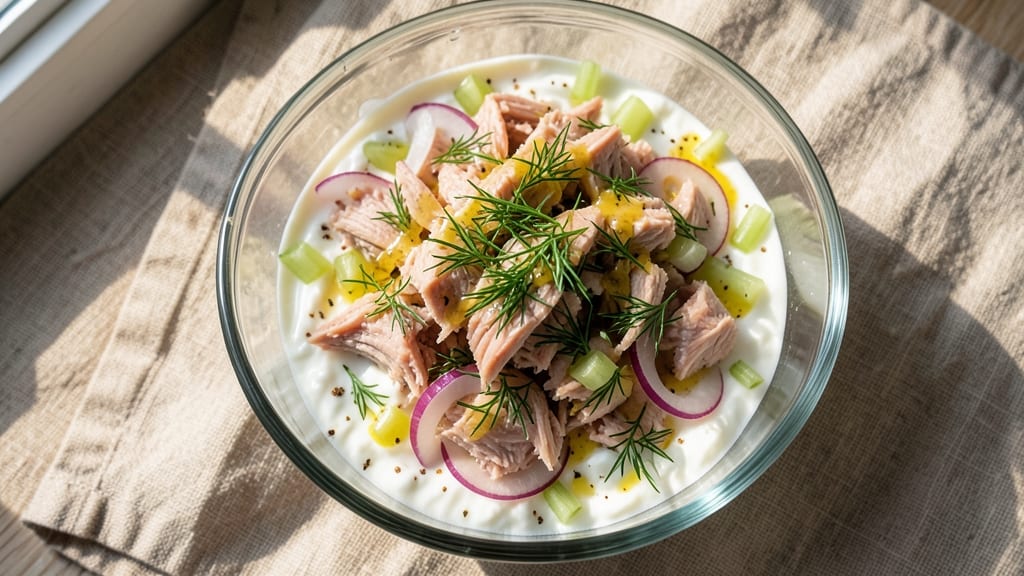
This healthy canned tuna salad recipe transforms a pantry staple into a protein-packed, zero-mayo masterpiece that’s perfect for picnics or meal prep. 💛 The secret lies in Greek yogurt’s tangy creaminess—replacing mayo while keeping the texture light and satisfying.
With omega-3s from tuna, fiber from celery, and crunch from red onion, every bite supports a balanced diet without sacrificing flavor.
What sets this recipe apart is its versatility: swap in avocado for healthy fats, add lemon zest for brightness, or keep it classic with a sprinkle of dill. The salad stays fresh for days in the fridge, making it ideal for lunchboxes or quick weeknight dinners.
No heavy ingredients here—just wholesome, nutrient-dense components that deliver on both taste and nutrition.
By the time you’re done mixing, you’ll have a salad that’s creamy yet light, packed with protein yet low in calories, and ready to be served on whole-grain crackers, lettuce wraps, or toasted bread.
The crunch from finely chopped celery and red onion keeps each bite interesting, while the Greek yogurt ensures a smooth, satisfying texture without the guilt.
Whether you’re meal prepping for the week or packing a picnic, this tuna salad delivers restaurant-quality results with minimal effort. The best part? It’s adaptable—vegan-friendly with olive oil, gluten-free with gluten-free crackers, and always packed with flavor. Let’s get started!
Ingredients for canned tuna salad recipe healthy
Healthy fats, fresh herbs, and protein-packed tuna create this zero-mayo masterpiece perfect for picnics or meal prep.
| Ingredient | Amount | Notes |
|---|---|---|
| Canned Tuna in Water 🐟 | 2 cans | Drained well, flaked with fork |
| Plain Greek Yogurt 🥛 | ½ cup | Full-fat for creaminess, unsweetened |
| Celery Stems 🧅 | 2 whole | Finely chopped, crisp texture |
| Red Onion 🧅 | ¼ cup | Finely diced, vibrant color |
| Fresh Dill 🌿 | 2 tbsp | Chopped, or 1 tsp dried |
| Lemon Juice 🍋 | 1 tbsp | Freshly squeezed, bright flavor |
| Extra-Virgin Olive Oil 🫒 | 1 tbsp | For richness, fruity variety |
| Diamond Crystal Kosher Salt 🧂 | ½ tsp | Adjust to taste |
| Freshly Ground Black Pepper 🌶️ | ¼ tsp | Freshly cracked for aroma |
| Avocado 🥑 | ½ cup | Pitted, diced, optional for fats |
| Whole-Grain Mustard 🌶️ | 1 tsp | For subtle tang |
| Lemon Zest 🍋 | 1 tsp | Bright aroma, optional garnish |
The Greek yogurt is non-negotiable here—full-fat for creaminess and tangy flavor without mayo's heaviness. Fage 5% or Siggi's are my go-tos, but any plain Greek works. For the tuna, wild-caught brands like Wild Planet have superior omega-3s, though any canned in water suffices. Celery and red onion add crunch and fiber; buy organic if possible to avoid pesticide residue. Fresh dill is ideal, but dried oregano at one-third the amount works in a pinch. The avocado, when included, should be ripe but firm—cut just before mixing to prevent browning.
No Greek yogurt? Vegan mayo or olive oil bridges the gap, though texture will differ. Substitute avocado with mashed white beans for plant-based protein. The lemon juice can be swapped for apple cider vinegar at half the amount, though flavor shifts slightly. For extra protein, add chickpeas or edamame. The mustard adds depth—Dijon or whole-grain both work, but avoid sweet varieties. Storage is key: keep the avocado (if using) separate until serving to maintain texture. For a vegan version, replace tuna with mashed chickpeas or white beans—just add a dash of nori flakes for umami.
This salad keeps beautifully for 4-5 days in an airtight container, though avocado may brown—cover with plastic wrap to prevent oxidation. Portion into single-serving containers for grab-and-go lunches. For longer storage, freeze without avocado for up to 3 months. Thaw overnight in the fridge and stir in fresh herbs before serving. The flavors meld beautifully overnight, making this ideal for meal prep. Pack with whole-grain crackers or lettuce wraps for a complete, balanced meal.
Why You'll Love This Recipe
- Here’s what sold me: Greek yogurt instead of mayo. It’s tangy, protein-packed, and somehow makes the tuna taste fresher. The dill brightens it up so much that I’ve served it at potlucks, and people always ask for the recipe. (Between us, I’ve been known to make extra.)
- No Chopping Nightmare: I swear, this recipe is the only tuna salad that doesn’t make me dread the celery prep. Just two thick celery stems—no tiny bits to hide in your teeth—plus a quick dice of onion. The red onion adds a sharp bite that cuts through the richness without making you cry like my first attempt with green onions.
- Creamy Without Mayo: Here’s what sold me: Greek yogurt instead of mayo. It’s tangy, protein-packed, and somehow makes the tuna taste fresher. The dill brightens it up so much that I’ve served it at potlucks, and people always ask for the recipe. (Between us, I’ve been known to make extra.)
- Lunchbox Legend: This is my go-to for meal prep—packs perfectly in containers and stays fresh for days. I’ll be real: my kids used to complain about tuna, but now they ask for it in their lunches. The yogurt keeps it from getting soggy, and the onion adds a little kick that makes it feel like a grown-up meal.
Step-by-step instructions for zero-mayo tuna salad
Here's how to create a protein-rich, creamy tuna salad without mayo—light yet satisfying.
👨🍳 Step 1: Flake the Tuna and Prep Vegetables
Open the 2 cans of tuna in water and drain thoroughly, then flake with a fork into a medium bowl. I press gently on each piece to break it into fine, even flakes—this ensures uniform texture throughout the salad. In a separate small bowl, finely chop the 2 whole celery stems and 0.25 cup red onion.
For the celery, I like to cut it into matchsticks first, then chop crosswise for maximum crispness. The red onion should be diced small enough to disappear in the final mixture—you don't want texture surprises. Set both aside while you prepare the remaining ingredients. This prep work prevents clumping later and ensures every bite has that fresh crunch.
🥘 Step 2: Mix the Creamy Base
In the same bowl with the tuna, add the 0.5 cup plain Greek yogurt, 1 tbsp extra-virgin olive oil, 1 tbsp lemon juice, 1 tsp whole-grain mustard, 0.5 tsp kosher salt, and 0.25 tsp freshly ground black pepper. Using a silicone spatula, gently fold everything together until just combined—you're looking for a smooth, creamy consistency without overworking the mixture.
Here's the thing—Greek yogurt provides that tangy creaminess without the heavy calories of mayo. The olive oil adds richness while keeping it light, and the mustard cuts through the fishy notes beautifully. Don't skip the folding motion; vigorous mixing can make the salad dense. The mixture should look like thick, pale dressing at this stage.
🍳 Step 3: Combine and Season
Add the chopped celery, red onion, and 2 tbsp chopped fresh dill to the tuna mixture. Gently fold everything together until evenly distributed. The salad should hold its shape when scooped but still feel light and airy. Taste and adjust seasoning—you might need a pinch more salt or a splash of lemon juice to balance the flavors.
Real talk: The avocado is optional but adds healthy fats that make this salad extra satisfying. If using, add the 0.5 cup diced avocado now and gently fold it in last to prevent browning. The dill should be chopped finely enough to distribute evenly—you want that herby brightness in every bite. Mix just until combined; overmixing can turn the avocado into mush.
⏰ Step 4: Rest and Garnish
Cover the bowl and refrigerate for at least 30 minutes (up to 2 hours) to let the flavors meld. This resting period allows the yogurt to fully incorporate and the avocado to soften slightly if using. When ready to serve, give it one final gentle stir to redistribute any settled ingredients.
For garnish, I sprinkle with 1 tsp lemon zest and a few extra dill leaves. The zest adds a bright citrus aroma that cuts through the richness, while the fresh dill gives a pop of color. Serve on whole-grain crackers, in lettuce wraps, or with sliced veggies for a protein-packed picnic that actually feels healthy.
Pro Tips For Making Canned Tuna Salad Recipe Healthy
- Drain and Pat Dry: The tuna’s water is the real enemy here—it makes your salad soggy. After draining, wrap the tuna in a clean kitchen towel and press firmly for 30 seconds to soak up every last drop. Trust me, the texture difference is noticeable, especially when you’re mixing it with the yogurt.
- Use a Microplane for Onion: Skip the knife for red onion—it’s too aggressive. A microplane gives you fine, even strands that dissolve into the salad without adding bulk or bitterness. Do this right after peeling, while the onion is still crisp, and you’ll get the freshest flavor without overpowering the dill.
- Chill the Yogurt First: Room-temperature Greek yogurt can turn your salad grainy. Pop the container in the fridge for 10 minutes before using—it blends smoother and keeps the texture creamy. I learned this after making a batch that separated like a bad smoothie.
- Add Celery Last: Celery releases water when chopped, and if you mix it in early, your salad will turn watery by the time you eat it. Chop it just before folding everything together, and save the excess liquid for a quick garnish or a splash in your next smoothie.
Troubleshooting this recipe
Grainy Tuna Texture
If your tuna salad ends up looking like a chunky stew instead of smooth, it’s likely because the tuna wasn’t flaked properly. Use a fork to press gently against each piece in the can, breaking it into fine, even flakes—think of it like shredding cheese.
For extra smoothness, I pulse the drained tuna in a food processor for 10-15 seconds before mixing. Just don’t overdo it, or you’ll end up with a paste. 🌟
Too Wet or Dry
Salad consistency is all about balance. If it’s too wet, add 1 tbsp more Greek yogurt or a pinch of salt to draw out moisture. For dryness, stir in 1 tsp lemon juice or ½ tsp olive oil—these bind the ingredients without making it soggy.
The ideal texture should hold its shape when scooped but still feel light. I’ve found that resting the salad for 30 minutes before serving helps it thicken naturally.
Fishy Aftertaste
Fresh tuna should taste mild, not fishy. If yours has a strong oceanic flavor, it’s likely from the canning process or old tuna. Always use canned tuna in water (not oil) for a cleaner taste, and drain it thoroughly.
For extra freshness, add 1 extra tbsp lemon juice or a splash of apple cider vinegar—the acidity neutralizes any funk. A pinch of whole-grain mustard also helps balance flavors beautifully.
Avocado Browning
If you add avocado, it’ll turn brown unless you act fast. Cut it just before mixing and toss the salad with ½ tsp lemon juice immediately after combining. For longer storage, keep the avocado separate until serving or cover the salad tightly with plastic wrap pressed directly on the surface.
I’ve also had success using ¼ tsp citric acid (found in baking aisles) to slow browning—it’s a game-changer for meal prep.
Lacking Crunch
Celery and red onion are the secret to texture, but if they soften too quickly, try these tricks: Soak the chopped veggies in ice water for 5 minutes before draining and adding to the salad.
This preserves their crispness. For extra crunch, add 1 tbsp finely chopped pickles or ¼ cup diced bell pepper—they hold up better than celery in long-stored salads.
Separation After Storage
If the yogurt and tuna separate after refrigerating, it’s usually because the mixture wasn’t folded enough. Give it a good stir with a silicone spatula before serving, or add 1 tsp Dijon mustard to help emulsify.
For future batches, mix in 1 tsp cornstarch (yes, really!)—it acts as a natural thickener and binder. Store in an airtight container, and the layers will stay cohesive for days. ⚡
Nutrition facts
Frequently asked questions
Can I use Greek yogurt instead of mayo in other salads? Greek yogurt works beautifully in chicken salad, potato salad, or even pasta salad. It adds protein and creaminess while cutting calories. For best results, use full-fat yogurt for richness, or blend in 1 tsp olive oil if you prefer lighter versions. Just
How do I store this tuna salad without it getting soggy?
Store it in an airtight container with plastic wrap pressed directly on the surface to prevent moisture buildup. For longer storage (4-5 days), keep the avocado (if using) separate until serving. If the salad thickens, stir in 1 tsp lemon juice or ½ tsp olive oil before eating. Avoid metal containers—they can react with the acidity.
What’s the best way to serve this healthy tuna salad?
Try it on whole-grain crackers, lettuce wraps, or toasted sourdough for a satisfying bite. For a complete meal, pair with sliced cucumbers, cherry tomatoes, or a side of mixed greens. It’s also perfect in whole-wheat pita pockets or as a filling for stuffed bell peppers. The Greek yogurt base makes it versatile for both hot and cold dishes!
Can I make this recipe vegan?
Yes! Swap the tuna for mashed chickpeas or white beans (½ cup) and replace Greek yogurt with vegan mayo or silken tofu blended with lemon juice. Add 1 tsp nori flakes for umami depth. Keep the celery, red onion, and herbs—just omit the olive oil if avoiding all fats. The texture will differ slightly but still deliver great flavor and protein.
Why does my tuna salad sometimes taste fishy?
Fishy flavor usually comes from old tuna or not draining it well. Always use canned tuna in water (not oil) and drain thoroughly. For extra freshness, add 1 extra tbsp lemon juice or a pinch of whole-grain mustard—both help neutralize any funk. If the tuna is past its prime, consider fresher options like smoked salmon or sardines for a milder taste.