
Salads
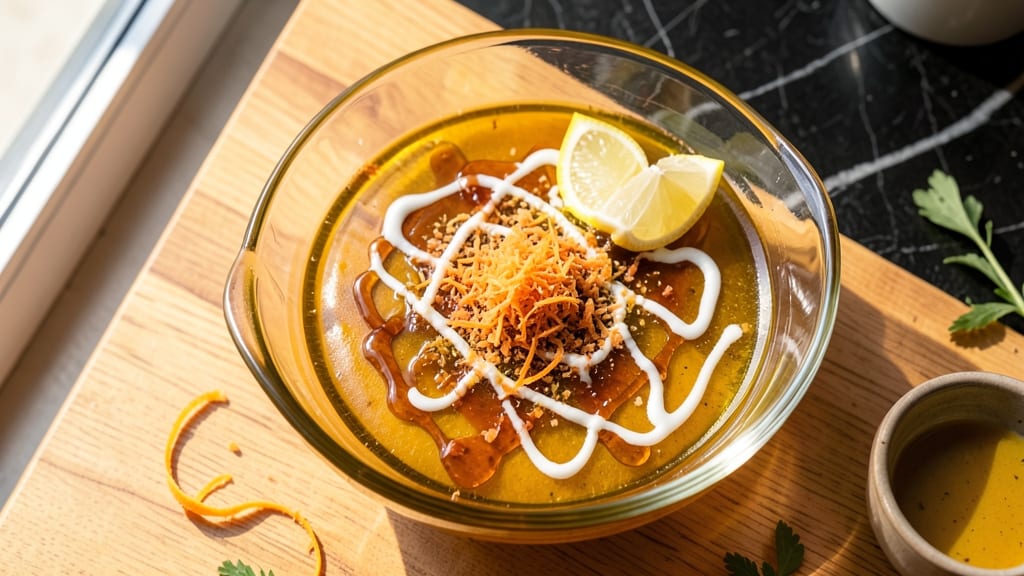
This citrus ginger salad dressing recipe transforms ordinary greens into vibrant, restaurant-quality bites with just a few simple ingredients. The secret lies in balancing bright citrus with fresh ginger and a touch of honey, creating a dressing that's tangy, slightly sweet, and packed with zing.
I developed this recipe after realizing how much better store-bought dressings tasted when homemade—it's the perfect balance of freshness and depth.
What makes this dressing special is its versatility—it elevates everything from simple arugula salads to hearty grain bowls. The emulsification technique ensures it stays creamy and clings to every leaf or bite, without separating.
You’ll need just 10 minutes to whisk everything together, and the flavors only get better as they sit.
The result is a dressing that’s bright enough to cut through rich ingredients yet delicate enough to complement lighter greens. It keeps well in the fridge for up to 5 days, making it ideal for meal prep.
Whether you're drizzling it over a fresh spring salad or using it as a marinade, this dressing delivers a burst of flavor that’s impossible to resist.
For extra depth, try infusing the oil with garlic or adding a pinch of chili flakes. The possibilities are endless, but the base recipe is foolproof—no fancy techniques required. Let’s get started!
Ingredients for citrus ginger salad dressing
Nine vibrant ingredients combine to create a restaurant-quality citrus ginger dressing that elevates any salad.
| Ingredient | Amount | Notes |
|---|---|---|
| Extra-Virgin Olive Oil 🫒 | ¾ cup | High-quality, fruity, cold-pressed |
| Fresh Lemon Juice 🍋 | ½ cup | Freshly squeezed, seeds strained |
| Fresh Orange Juice 🍊 | ½ cup | Freshly squeezed, no pulp |
| Fresh Ginger Root 🌿 | 2 tbsp | Finely grated, aromatic |
| Raw Honey 🍯 | 2 tbsp | Local, unprocessed preferred |
| Dijon Mustard 🍯 | 1 tbsp | High-quality, smooth texture |
| Apple Cider Vinegar 🍶 | 1 tbsp | Raw, unfiltered preferred |
| Diamond Crystal Kosher Salt 🧂 | ½ tsp | Fine grain, balanced flavor |
| Freshly Ground Black Pepper 🌶️ | ¼ tsp | Freshly cracked for potency |
The quality of your citrus and ginger makes all the difference here. Freshly squeezed juices from organic lemons and oranges at Whole Foods Market or your local farmers market yield the brightest flavor. For ginger, young, plump roots (not fibrous or shriveled) are essential—look for them in the produce section of specialty stores like Trader Joe's or Asian markets. The honey should be raw and local if possible; Manuka honey adds an extra depth of flavor. Dijon mustard is non-negotiable—its smooth texture emulsifies beautifully, unlike powdered mustard. Store your citrus juices in the fridge for up to 3 days after squeezing, and keep ginger refrigerated in a sealed container for 2-3 weeks.
No fresh ginger? Powdered ginger at half the amount works in a pinch, though it lacks the same depth. Substitute orange juice with grapefruit juice for extra tartness, or swap lemon for lime juice to intensify the zing. Running low on honey? Maple syrup or agave nectar are excellent alternatives, though they alter the flavor slightly. For a sugar-free version, omit the honey entirely and increase the vinegar by 1 teaspoon. The mustard can be replaced with whole-grain mustard if you prefer a slightly grainier texture, though it may separate more easily. Always strain your citrus juices thoroughly to avoid a gritty dressing.
This dressing maintains its vibrant flavor and creamy texture for up to 5 days when stored in an airtight container in the refrigerator. For longer storage, transfer to a sterile glass jar and freeze for up to 3 months. To extend freshness, add a thin layer of extra-virgin olive oil on top before sealing—this preserves the citrus brightness. Shake well before each use, as natural separation occurs over time. Portion into small containers for salads, grain bowls, or marinades to keep your ingredients organized and ready for quick assembly.
Why You'll Love This Recipe
- Five-Ingredient Magic: I swear, this dressing comes together with fewer ingredients than my morning coffee order. Just toss the olive oil, juices, grated ginger, and honey—no blender, no fuss, no second-guessing.
- Zingy Wake-Up Call: That bright citrus punch from fresh lemon and orange juice? It’s like sunshine in a bottle. The ginger adds a warm, spicy kick that lingers just enough to make every bite feel intentional.
- Meal Prep MVP: Honestly, I make a big batch on Sundays and keep it in the fridge for the week. It’s perfect over greens, grilled chicken, or even as a marinade—no one ever complains when I pull it out.
- Budget Brightener: Extra-virgin olive oil and fresh citrus might sound fancy, but they stretch farther than you’d think. A little goes a long way, and the honey balances everything without breaking the bank. My wallet and taste buds thank me.
Step-by-step instructions for citrus ginger salad dressing
This vibrant dressing combines bright citrus and aromatic ginger for a perfectly balanced, restaurant-quality finish.
Finely Grate the Fresh Ginger Root
Use a microplane or fine grater to produce 2 tablespoons of fresh ginger root—this ensures maximum surface area for flavor extraction. The ginger should resemble fine sand with no visible chunks. I like to work in stages, grating just enough for immediate use to prevent oxidation, which dulls the ginger's potency.
Set the grated ginger aside in a small bowl. The aroma should be immediately pungent and citrusy—this is your first quality check. If it smells faint, your ginger may be old or not fresh enough. Fresh ginger should have a sharp, almost lemony bite when you taste a pinch.
Whisk Together the Citrus and Acid Components
In a medium bowl, combine the 0.5 cup fresh lemon juice, 0.5 cup fresh orange juice, 1 tablespoon apple cider vinegar, and 0.5 teaspoon diamond crystal kosher salt. Whisk vigorously for 30 seconds until the salt fully dissolves and the mixture becomes homogeneous. The acidity from the vinegar and citrus will begin to mellow slightly as you whisk.
This step is crucial for balancing the dressing's acidity and sweetness. The citrus juices should be freshly squeezed—bottled juices lack the bright, complex flavors that make this dressing exceptional. Strain the juices if you prefer a pulp-free texture, though I often leave a touch of pulp for added texture and nutrients.
Incorporate the Honey and Mustard
Add the 2 tablespoons raw honey and 1 tablespoon Dijon mustard to the citrus mixture. Whisk continuously for 1 minute until the honey is fully dissolved and the mustard is completely emulsified. The dressing should begin to thicken slightly, taking on a glossy sheen. This is where the sweetness and depth of flavor develop.
The honey should be local and unprocessed if possible—it adds subtle floral notes that complement the citrus beautifully. The Dijon mustard provides a smooth, tangy backbone that prevents the dressing from being overly sweet. If the mixture appears too thick at this stage, you can thin it later with a splash of water or additional citrus juice.
Slowly Emulsify the Olive Oil
With the whisking motion still going, very slowly drizzle in the 0.75 cup extra-virgin olive oil—this gradual addition is key to creating a stable emulsion. Whisk continuously for 2-3 minutes until the dressing thickens into a creamy, velvety consistency. The oil should be incorporated completely, with no visible separation.
This emulsification process is what transforms a simple vinaigrette into a luscious, clingy dressing. If the dressing breaks or separates, simply whisk in 1 teaspoon of warm water or a splash of citrus juice to re-emulsify. The final texture should coat the back of a spoon smoothly, with no oil pooling on top.
Finish with Freshly Ground Black Pepper and Rest
Add the 0.25 teaspoon freshly ground black pepper and whisk for 10 seconds to distribute evenly. Taste the dressing and adjust the balance of sweetness, acidity, or salt as needed. For a more robust flavor, you might add an extra pinch of salt or a squeeze of fresh citrus.
Cover the bowl and let the dressing rest for 10 minutes at room temperature. This resting period allows the flavors to meld and the emulsion to stabilize further. The dressing will thicken slightly as it cools, so if you prefer a thinner consistency, whisk in 1-2 teaspoons of water before serving. Store any leftovers in an airtight container in the refrigerator for up to 5 days, shaking well before each use.
Pro Tips For Making Citrus Ginger Salad Dressing
- GRATE, DON’T CHOP GINGER: The moment you grab the knife to mince fresh ginger, stop. A microplane or fine grater gives you that fragrant, fine texture without the bitter edge raw chunks leave behind—just 1 teaspoon of grated ginger (not packed) for a balanced dressing.
- STRAIN THE JUICE: Skip the pulp in your citrus juice. Strain both lemon and orange juice through a fine-mesh sieve or cheesecloth into a bowl—this keeps your dressing silky smooth and prevents clumps that ruin the pour. (Yes, even if you’re in a hurry.)
- EMULSIFY THE OIL: Pour the olive oil into the citrus-ginger mixture slowly while whisking like your life depends on it. The first few drops will resist—keep going. Once it starts blending, you’ve broken the emulsion, and the dressing will hold together. (No, you don’t need an immersion blender.)
- SWEETEN WITH WARM HONEY: Drizzle honey into the warm dressing (just off the heat or from your hands) instead of cold. It dissolves instantly, giving you a glossy, cohesive finish without grainy streaks. (Cold honey? You’ll regret it.)
Flavor customization for this dish
Sweet Heat Boost
Add 1 teaspoon of chili flakes or ½ teaspoon of gochujang paste for a subtle kick that pairs perfectly with the citrus. For a sweeter heat, stir in 1 teaspoon of honey-chili sauce like Cholula or Sriracha after emulsifying.
The ginger’s warmth complements the spice beautifully, creating a complex flavor profile. 🌶️
Herb Infusions
Brighten the dressing with 1 tablespoon of finely chopped fresh herbs like cilantro, basil, or mint. For a Mediterranean twist, add 1 teaspoon of dried oregano or thyme.
Fresh herbs should be added just before serving to preserve their vibrant color and aroma. If using dried herbs, reduce the amount by half to avoid overpowering the citrus.
Citrus Variations
Swap out the orange juice for grapefruit juice to intensify the tartness, or add lime juice for a more tropical vibe. For a bold flavor, mix in 2 tablespoons of blood orange juice.
Each citrus brings a unique depth—experiment to find your favorite balance. I love using blood orange for a festive touch during holiday meals.
Smoky Depth
Infuse the olive oil with 1 clove of garlic and ½ teaspoon of smoked paprika before adding it to the dressing. Heat the oil gently with the garlic and paprika for 2 minutes, then strain before emulsifying.
This adds a subtle smokiness that pairs wonderfully with the ginger’s zing. Perfect for hearty salads or grilled dishes.
Savory Umami
Elevate the dressing with 1 teaspoon of soy sauce or fish sauce for an umami boost. This works especially well with Asian-inspired salads or grain bowls. For a vegetarian option, use 1 teaspoon of tamari or miso paste (thinned with a splash of water).
The umami enhances the dressing’s complexity without overpowering the citrus.
Spiced Citrus
Add ¼ teaspoon of ground cinnamon or cardamom for a warm, aromatic twist. These spices complement the ginger beautifully, creating a dressing that’s perfect for fall or winter salads.
For a festive touch, a pinch of nutmeg adds a cozy depth. Always start with a small amount and adjust to taste—spices can intensify over time.
Nutrition facts
Frequently asked questions
Can I make this dressing without honey?
Yes! For a sugar-free version, simply omit the honey and increase the apple cider vinegar by 1 teaspoon to maintain balance. You can also substitute with 1 teaspoon of maple syrup or agave nectar if you prefer a natural sweetener. The dressing will still have bright citrus and ginger flavors—just slightly less sweet.
How long will this dressing keep in the fridge?
This dressing stays fresh for up to 5 days when stored in an airtight container in the refrigerator. To extend its shelf life, add a thin layer of extra-virgin olive oil on top before sealing—this preserves the citrus brightness. Always shake well before using, as natural separation may occur over time.
What can I use if I don't have fresh ginger?
In a pinch, you can substitute 1 teaspoon of powdered ginger (half the amount of fresh). While it won't have the same depth of flavor, it still provides warmth. For a more authentic taste, try infusing 1 teaspoon of ginger essential oil into the olive oil (use sparingly—it's potent!).
Can this dressing be used for other dishes besides salads?
This versatile dressing works beautifully as a marinade for grilled chicken or fish, a drizzle for roasted vegetables, or even a sauce for noodles. Its bright citrus and ginger flavors pair well with proteins and veggies alike. Just reduce the olive oil slightly if using as a marinade to prevent sogginess.
Why did my dressing separate?
Separation usually happens when the emulsion breaks, often from adding oil too quickly or using low-quality mustard. To fix it, whisk in 1 teaspoon of warm water or a splash of citrus juice to re-emulsify. For prevention, always whisk continuously when adding oil and use high-quality Dijon mustard. The dressing should thicken into a creamy consistency with no oil pooling on top.