
Salads
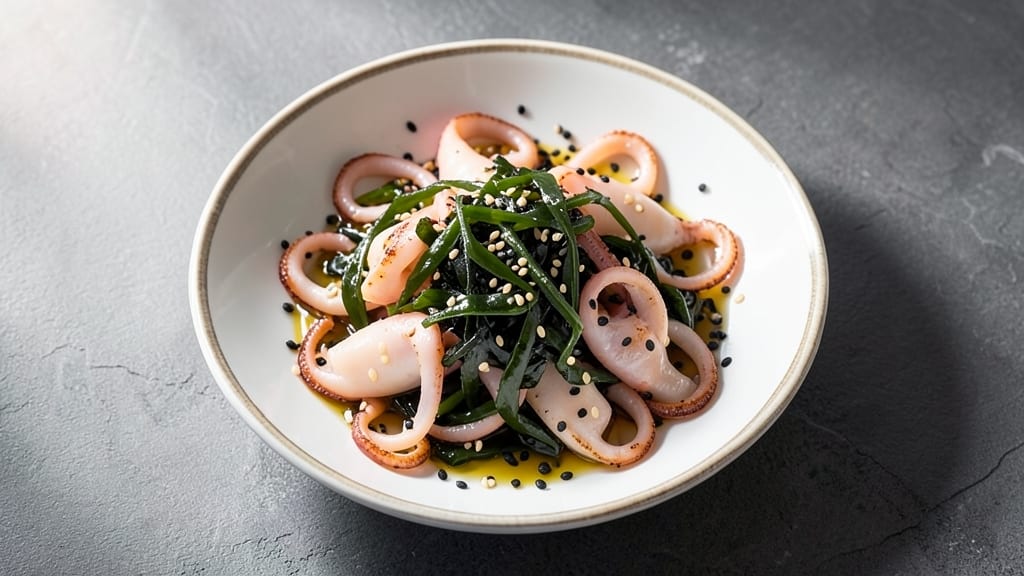
This Chuka Wakame Salad delivers a perfect balance of umami-rich seafood, crisp wakame, and nutty sesame—all in one vibrant dish. The secret lies in perfectly seared chuka (squid) that stays tender yet bouncy, paired with rehydrated wakame seaweed that adds a satisfying crunch.
Traditional Japanese techniques elevate this salad beyond ordinary seafood dishes, creating a harmonious blend of textures and flavors that's both restaurant-worthy and simple to recreate at home.
The foundation of this salad is a delicate sesame dressing that ties everything together with its nutty, slightly tangy profile. We'll start by preparing the chuka through quick searing, ensuring it remains tender while developing a subtle char.
The wakame, often overlooked in Western salads, provides a unique mineral-rich crunch that contrasts beautifully with the softness of the seafood. This isn't just a salad—it's a complete meal experience that balances protein, freshness, and umami in every bite.
What makes this recipe truly special is how each component works together: the chuka's tender yet slightly chewy texture, the wakame's crisp snap, and the dressing's ability to coat every ingredient without overpowering.
The result is a visually stunning dish with layers of color and flavor that will impress even the most discerning palates. Whether served as a light lunch or an elegant appetizer, this salad brings a taste of Japanese coastal cuisine to your table.
The assembly process is where the magic happens—carefully arranging the ingredients to create visual appeal while maintaining perfect texture contrast. We'll cover plating techniques that make this dish look as good as it tastes, ensuring every presentation feels like a moment of culinary artistry.
Ready to transform simple ingredients into a restaurant-quality experience?
Ingredients for chuka wakame salad
Four servings of umami-rich harmony—where crisp wakame meets tender chuka and sesame dressing ties it all together.
| Ingredient | Amount | Notes |
|---|---|---|
| Fresh Chuka (Squid) 🦑 | 1 lb | Cleaned, tentacles attached, sliced into rings |
| Dried Wakame Seaweed 🍃 | 2 oz | High-quality, organic preferred |
| White Sesame Seeds 🥜 | ¼ cup | Toasted lightly for enhanced flavor |
| Black Sesame Seeds 🥜 | 1 tbsp | For visual contrast and depth |
| Rice Vinegar 🍶 | ⅓ cup | Seasoned variety for subtle sweetness |
| Sesame Oil 🫒 | 2 tbsp | Toasted sesame oil for aroma |
| Soy Sauce 🍶 | 2 tbsp | Low-sodium preferred for balance |
| Mirin 🍶 | 1 tbsp | Sweet cooking wine for depth |
| Sugar 🍯 | 1 tsp | Granulated or raw cane |
| Toasted Sesame Oil 🫒 | 1 tbsp | For finishing dressing |
| Green Onion 🧅 | 3 whole | Thinly sliced, white and green parts |
| Diamond Crystal Kosher Salt 🧂 | ½ tsp | For seasoning chuka |
| Ground Black Pepper 🌶️ | ¼ tsp | Freshly cracked for heat |
| Cornstarch 🌾 | 1 tbsp | For tenderizing chuka |
The chuka selection is critical—look for fresh, plump squid with vibrant tentacles, a hallmark of quality. Japanese specialty markets or high-end seafood counters carry the best cuts, often pre-cleaned for convenience. If working with whole squid, pat dry thoroughly before slicing to ensure even searing. The wakame should be dried, not powdered—Japanese brands like Marukome or organic dried seaweed sheets work best. Store dried wakame in an airtight container away from light to preserve its delicate flavor. For sesame seeds, toast them in a dry pan over medium heat until fragrant—this enhances their nutty profile significantly.
No rice vinegar? Substitute with a mix of apple cider vinegar and a touch of honey (though mirin's sweetness will be missed). Short on mirin? Swap for 1 tsp sugar plus 1 tsp water to mimic its subtle sweetness. The black sesame seeds add visual drama—if unavailable, dried cranberries provide a similar pop of color. For the chuka, cornstarch is non-negotiable—it prevents toughness. If you can't find it, arrowroot powder works equally well. The dressing's balance relies on toasted sesame oil—don't skip this step, as its aroma is essential. For extra umami depth, add 1 tsp fish sauce to the dressing, though traditionalists may prefer to omit it.
Rehydrated wakame keeps for 3-4 days in the fridge, submerged in water—drain and refresh before using. Toasted sesame seeds maintain freshness for 2 weeks in a sealed container. The dressing components stay fresh for 1 week separately, but combine only before serving to prevent the sesame oil from turning rancid. For meal prep, sear the chuka last and store it separately until ready to assemble. The salad's crisp texture depends on proper wakame rehydration—soak for exactly 10 minutes, no longer, to avoid mushiness.
Why You'll Love This Recipe
- No-Fuss Prep: I swear, this salad takes less effort than microwaving leftovers. Just slice the chuka thin, sear it in a hot pan for 30 seconds per side (don’t overthink it), then toss with rehydrated wakame—no boiling, no waiting. The sesame seeds? Sprinkle and go.
- Umami Bomb: That first bite of tender chuka with its briny, slightly chewy texture? It’s like the ocean in your mouth. The wakame adds this deep, savory punch, while the toasted sesame seeds bring nutty warmth—honestly, I’ve never missed a creamy dressing here.
- Lunchbox Legend: Between us, this is my go-to for work lunches or kids’ school meals. Pack it in a jar, and the wakame stays crisp while the chuka holds its shape. My daughter used to turn up her nose at seaweed, but now she asks for seconds—(yes, even on a Tuesday).
- Budget Bright Spot: A single bag of dried wakame lasts me weeks, and squid is cheaper than chicken. That rice vinegar? A splash goes a long way. I’ll be real: this salad costs half what a sad office salad does, but it’s the kind of dish that makes people pause mid-bite and ask, “What’s in this?”
Step-by-step instructions for chuka wakame salad
Master the balance of textures and flavors with this precise preparation method.
Prepare the Chuka for Perfect Texture
Begin by slicing the 1 lb fresh chuka (squid) into ½-inch rings, ensuring tentacles remain attached for visual appeal. In a mixing bowl, combine the chuka with 1 tablespoon cornstarch, ½ teaspoon diamond crystal kosher salt, and ¼ teaspoon ground black pepper. Toss gently to coat evenly—this creates a tenderizing barrier that prevents toughness when cooked.
Heat 2 tablespoons sesame oil in a large skillet over medium-high heat until shimmering. Add the chuka in a single layer, cooking undisturbed for 1-2 minutes per side until the edges turn opaque and slightly golden—this indicates perfect doneness. The chuka should remain tender with a subtle chew, not rubbery. Transfer to a plate and let cool completely before proceeding.
Rehydrate and Prepare the Wakame
Place the 2 oz dried wakame seaweed in a heatproof bowl and cover with 2 cups hot water (just off boil). Let soak for 10 minutes until the wakame expands to 3-4 times its original size and becomes tender. Drain thoroughly using a fine-mesh strainer, pressing gently to remove excess water. Chop the rehydrated wakame into ¼-inch pieces for even distribution in the salad.
While the wakame soaks, lightly toast the ¼ cup white sesame seeds and 1 tablespoon black sesame seeds in a dry skillet over low heat for 2-3 minutes, stirring constantly until fragrant. Remove immediately to prevent burning—you want nutty aroma, not bitterness. Let cool before adding to the salad.
Create the Umami Dressing
In a small bowl, whisk together the ⅓ cup rice vinegar, 2 tablespoons soy sauce, 1 tablespoon mirin, 1 teaspoon sugar, and 1 tablespoon toasted sesame oil until the sugar dissolves completely. Taste and adjust seasoning—this dressing should balance sweet, salty, and umami notes. The mixture should coat the back of a spoon but remain pourable.
Add the cooled chuka and wakame to a large serving bowl. Drizzle half of the dressing over the ingredients and toss gently to coat evenly. The chuka should glisten slightly from the dressing, but not appear soggy. Fold in the toasted sesame seeds and thinly sliced green onion (white and green parts separated) for visual contrast and freshness.
Assemble and Finish the Salad
Divide the chuka-wakame mixture among 4 serving plates, arranging the green onion white parts in a circular pattern around each portion for presentation. Drizzle with the remaining dressing, allowing it to pool slightly at the base of each plate. The final dish should showcase vibrant colors—deep green wakame, golden chuka, and contrasting black/white sesame seeds.
Garnish each serving with an additional sprinkle of black sesame seeds and a final drizzle of toasted sesame oil for aromatic depth. Serve immediately while the chuka remains tender and the wakame retains its crisp texture. The salad's umami intensity peaks when enjoyed fresh, with each bite delivering crunch, chew, and layered flavors in perfect harmony.
Pro Tips For Making Chuka Wakame Salad
- STEAM THE CHUKA: I learned this the hard way—boiling squid turns it rubbery. Instead, steam it for 3-4 minutes in a bamboo steamer or colander over simmering water. The texture stays tender and bouncy, and it cooks faster than you’d think.
- SOAK WAKAME 10 MINUTES: Dried wakame soaks up water like a sponge, but 10 minutes is the sweet spot—any longer and it gets mushy. Use 1 cup cold water per 20g wakame, then drain and squeeze out excess liquid. (Yes, even if you’re impatient like me.)
- TOAST SESAME SEEDS LOW: Black and white sesame seeds burn faster than you’d expect. Toast them in a dry pan over medium-low heat, shaking the pan constantly, until they’re golden—about 2-3 minutes. Too hot, and they’ll be bitter before you know it.
- USE COLD VINEGAR: Warm rice vinegar loses its bright tang. Mix it with other dressing ingredients (like sugar or soy sauce) and refrigerate for 15 minutes before tossing with the salad. The flavor pops more, and the wakame stays crisp. (Your future self will thank you.)
Make-ahead tips for this recipe
Prep Ahead Strategy
Start by prepping the wakame seaweed up to 3 days in advance—rehydrate it in 2 cups hot water for 10 minutes, then drain and store in an airtight container submerged in fresh water.
This keeps it crisp and ready to use. I always do this first because it’s the most time-consuming step, and the wakame holds its texture beautifully when stored properly. 🌿
Chuka Prep Timeline
Sear the chuka (squid) up to 2 days ahead and store it in a sealed container in the fridge.
The cornstarch coating helps it stay tender longer, but I recommend reheating it gently in a skillet with 1 tsp sesame oil over medium heat for 1-2 minutes before assembling the salad. This reactivates its crisp edges without overcooking. 🦑
Dressing Components
Make the dressing components separately and store them in small jars for up to 1 week. Keep the sesame oil separate until ready to combine—this prevents it from turning rancid.
When ready to serve, whisk together ⅓ cup rice vinegar, 2 tbsp soy sauce, 1 tbsp mirin, 1 tsp sugar, and 1 tbsp toasted sesame oil. The flavors meld beautifully when mixed fresh. 🍶
Sesame Seed Prep
Toast the white and black sesame seeds up to 2 weeks ahead and store them in a cool, dark place in an airtight container. The aroma intensifies over time, adding depth to the salad.
Just sprinkle them fresh before serving to maintain their crunch and visual appeal. I like to portion them into small containers so I can grab them quickly during assembly. 🥜
Final Assembly
Assemble the salad just before serving to preserve the crisp texture of the wakame and the tender chew of the chuka. Toss the cooled chuka with the rehydrated wakame, then drizzle with the dressing and fold in the toasted sesame seeds.
Arrange on plates with the green onion white parts in a circular pattern for an elegant presentation. The last-minute assembly ensures everything stays fresh and vibrant. ✨
Nutrition facts
Frequently asked questions
Can I substitute chuka (squid) with another seafood?
For a similar texture, try thinly sliced calamari or shrimp (peeled and deveined). If using shrimp, pat them dry and coat lightly with cornstarch before searing. For a firmer texture, scallops work well—just sear them for 1-2 minutes per side until opaque. Avoid fish like salmon or cod, as they’ll release too much moisture and alter the salad’s delicate balance.
How do I store leftover wakame seaweed?
After rehydrating, drain the wakame thoroughly and store it in an airtight container submerged in fresh cold water to maintain crispness. It’ll keep for 3-4 days in the fridge. For longer storage, drain completely, pat dry, and freeze in a single layer before transferring to a sealed bag—this preserves texture for up to 1 month. Thaw overnight in the fridge before using.
Why does my wakame turn mushy?
Over-soaking is the most common mistake! Wakame should soak for exactly 10 minutes in hot water—no longer. If it feels soft or slimy, you’ve overhydrated it. For extra crispness, rinse the rehydrated wakame under cold water before chopping. Also, avoid using cold water for soaking, as it won’t fully rehydrate the seaweed. Pro tip: Use just off-boil water for optimal texture.
Can I make this salad gluten-free?
Yes! Simply swap the soy sauce for a tamari or coconut aminos (both gluten-free). Check that your mirin and rice vinegar are also certified gluten-free. The rest of the ingredients are naturally gluten-free, so this adaptation keeps all the umami and crunch intact. Just ensure your sesame seeds are processed in a dedicated facility if you have severe gluten sensitivities.
What’s the best way to reheat leftover chuka?
Reheat gently to avoid rubberiness! Place the chuka in a skillet over medium-low heat with 1 teaspoon sesame oil and cook for 30-60 seconds per side**—just until warmed through. Microwaving is a no-go, as it makes the chuka tough. For extra flavor, add a splash of soy sauce or mirin while reheating. Serve immediately to maintain texture.