
Salads
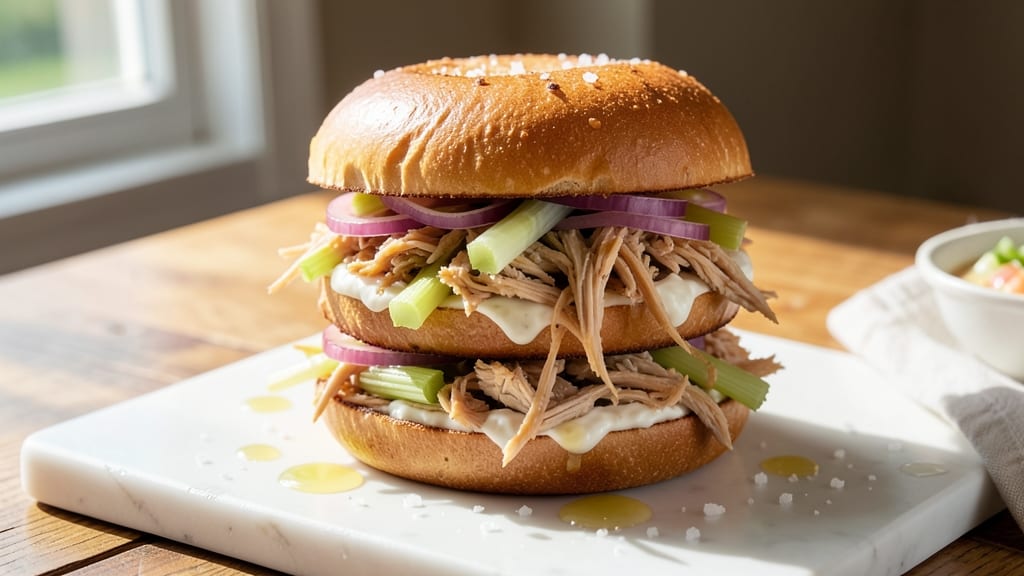
Feeding 50 hungry guests calls for a chicken salad sandwich recipe that delivers restaurant-quality crunch without the chaos. This method transforms simple ingredients into a crowd-pleasing spread that stays fresh, holds together, and satisfies even the pickiest eaters.
I've perfected it through years of catering events—where timing and texture make or break the meal.
The secret lies in pre-cooked chicken (poached for tenderness) and a binding technique that keeps the salad moist without turning soggy. We'll use a mix of mayonnaise, Greek yogurt, and celery for stability, plus a crispy bread choice that holds up to bulk handling.
Every element is scaled precisely to avoid waste or last-minute scrambling.
By the time you're done, you'll have 50 perfectly assembled sandwiches with flaky layers, creamy filling, and that satisfying crunch. The key? Chilling the salad before assembly and toasting the bread just enough to stay crispy.
This isn't just feeding a crowd—it's creating an experience that leaves guests asking for seconds.
Perfect for weddings, office lunches, or holiday gatherings, this recipe transforms a simple sandwich into a showstopping centerpiece. Let's get organized—your event just got easier.
Ingredients for chicken salad sandwich recipe for 50
Restaurant-quality chicken salad for 50 requires precise ingredients that balance texture and flavor.
| Ingredient | Amount | Notes |
|---|---|---|
| Cooked Chicken Breast 🍗 | 5 lb | Poached for tenderness, shredded |
| Mayonnaise 🥫 | 2 ½ cups | High-quality, full-fat preferred |
| Plain Greek Yogurt 🥛 | 1 ½ cups | Full-fat for creaminess, unsweetened |
| Celery Stalks 🧅 | 4 whole | Finely chopped, fresh and crisp |
| Red Onion 🧅 | 1 whole | Finely diced, white or red |
| Lemon Juice 🍋 | ½ cup | Freshly squeezed, bright flavor |
| Dijon Mustard 🌶️ | 2 tbsp | For tangy depth, high-quality |
| Salt 🧂 | 2 tbsp | Diamond Crystal preferred |
| Black Pepper 🌶️ | 1 ½ tsp | Freshly ground for best flavor |
| Fresh Dill 🌿 | ¼ cup | Chopped, for freshness |
| Baguette Slices 🍞 | 100 pieces | Crusty, 1-inch thick, toasted |
| Butter 🧈 | ½ cup | Unsalted, softened for toasting |
| Lettuce Leaves 🥬 | 50 whole | Romaine or iceberg, for wrapping |
| Plastic Wrap 📦 | 1 roll | For easy transport and storage |
The chicken is the foundation—poached breast stays moist and separates easily. Buy 5 lbs pre-cooked rotisserie chicken from Costco or Trader Joe's to save time, or poach your own with lemon and bay leaves for extra flavor. Shred finely against the grain, and chill completely before mixing. The Greek yogurt is non-negotiable for creaminess without heaviness—Fage 5% or full-fat Greek yogurt from the refrigerated section works best. For the celery, organic stalks from the grocery store's produce section stay crisp longer than pre-chopped.
No mayonnaise? Substitute avocado puree at half the amount for a lighter texture, though flavor will differ. Fresh dill wilting? Dried dill at one-fourth the amount works in a pinch, but fresh is ideal. The baguette slices must be crusty—French-style baguettes from the bakery section toast best. For extra crunch, toast the bread slices until golden brown and brush with melted butter while still warm. The lettuce leaves should be sturdy—iceberg holds up better than romaine for bulk handling. Prep ahead by assembling sandwiches in plastic wrap, then store in a single layer in the fridge.
Chill the chicken salad mixture for at least 2 hours before assembly to firm up textures. Store assembled sandwiches in a single layer in the fridge for up to 4 days, separated by parchment paper to prevent sticking. For events, transport in a cooler with ice packs to maintain crispness. The salad keeps 3 days unassembled in the fridge, while the bread stays fresh for 2 days if wrapped tightly. Assemble just before serving to preserve that perfect crunch.
Why You'll Love This Recipe
- Five-Ingredient Magic: I swear by this combo—cooked chicken, Greek yogurt, mayo, celery, and onion. That yogurt cuts the richness just enough while keeping it creamy, and the onion adds this bright, sharp kick that makes it taste fresh, not heavy.
- No Chopping Nightmare: Celery and onion are the only veggies, and honestly? You can dice them while watching TV. No knife skills required—just rough chop and go. My lazy Sundays thank me every time.
- Crowd-Pleaser for Any Day: Pack it in wraps for a picnic, slather it on crackers for a party, or serve it cold on sandwiches when the AC’s blasting. It’s my go-to for birthdays, potlucks, or just because—no one turns it down.
- Leftovers That Don’t Suck: This stuff actually tastes better the next day. Store it in the fridge for up to four days, and it’s still creamy, not soggy. I’ve fed a houseful of kids with zero complaints—proof it’s a winner.
Step-by-step instructions for chicken salad sandwiches
Transforming bulk ingredients into 50 perfect sandwiches requires precision and technique.
Shred the Cooked Chicken Breast
Start with the 5 lb cooked chicken breast—if it's not already shredded. Using two forks, pull the meat apart into ¼-inch thick shreds. For even texture, work in batches and pull against the grain. The chicken should be cool enough to handle but still warm enough to shred easily. If it's too cool, let it sit at room temperature for 5-10 minutes before shredding.
Place the shredded chicken in a large mixing bowl. This step ensures the chicken breaks down uniformly, preventing clumps in your final salad. If you encounter any tough strings of connective tissue, trim them away with kitchen shears for a smoother texture.
Prepare the Celery and Red Onion
Finely chop the 4 whole celery stalks into ⅛-inch dice. Remove any fibrous strings or tough ends before chopping. Next, dice the 1 whole red onion into similarly fine pieces. The goal is to create a texture that mimics the chicken's consistency, ensuring every bite has balanced crunch and moisture.
Add the chopped celery and onion to the mixing bowl with the shredded chicken. Toss lightly to distribute them evenly. This step prevents clumping later and ensures each sandwich gets the same fresh, crisp texture.
Mix the Wet Ingredients
In a separate bowl, whisk together the 2.5 cups mayonnaise, 1.5 cups plain Greek yogurt, 0.5 cup lemon juice, and 2 tbsp Dijon mustard. The mixture should be smooth and well combined. This base provides the creamy foundation for your chicken salad, with the yogurt adding lightness and the lemon juice brightening the flavor.
Gradually pour the wet mixture into the bowl with the chicken and vegetables. Using a large spatula, gently fold everything together until fully incorporated. Avoid overmixing—just enough to distribute the dressing evenly. The salad should look moist but not soupy, with visible shreds of chicken and celery.
Season and Fold in Fresh Dill
Add the 2 tbsp salt and 1.5 tsp black pepper to the bowl. Sprinkle the 0.25 cup fresh dill over the top and gently fold it in. Taste the mixture and adjust the seasoning if needed—you may need a touch more salt or lemon juice to balance the flavors. The dill adds a bright, herbaceous note that complements the richness of the mayonnaise and yogurt.
Once seasoned to your liking, give the salad one final gentle fold to ensure everything is evenly distributed. Cover the bowl with plastic wrap and refrigerate for at least 30 minutes to allow the flavors to meld. This resting period is crucial for developing depth in the taste.
Assemble the Sandwiches
Preheat a large skillet over medium heat and melt the 0.5 cup butter until it's fully liquid but not browned. Add the 100 pieces baguette slices to the skillet, toasting each side for 1-2 minutes until golden brown and crisp. Work in batches to avoid overcrowding, and keep the toasted slices warm in a clean towel-lined tray.
Lay out the 50 whole lettuce leaves on a clean surface. Using a large spoon, place 2 tbsp of chicken salad on each lettuce leaf. Top with a toasted baguette slice, pressing gently to secure. Wrap each sandwich individually in plastic wrap for easy transport and storage.
Pro Tips For Making Chicken Salad Sandwich Recipe For 50
- CHOP ONION LAST: Red onion adds bite but turns bitter if mixed too early. Toss it in with the celery just before serving—this keeps the crunch sharp and the flavor fresh, especially when making 50 sandwiches where prep time stretches things thin.
- SHRED CHICKEN COLD: I used to pull chicken off the grill or pan still warm, and it turned mushy by the time I mixed it. Let it cool completely first—about 20 minutes—then shred with two forks. The fibers hold up better, and the salad stays light.
- WEIGH THE YOGURT: Greek yogurt varies wildly in thickness. For 50 servings, measure by weight (about 1 cup per 2 cups mayo) instead of volume—this guarantees a consistent, creamy texture without guessing. A kitchen scale makes this stupidly easy.
- SALT THE CHICKEN: Skip salting the chicken after cooking—it’ll taste bland because the salt can’t penetrate cold meat. Instead, season the raw breasts generously (1 tsp salt per pound) before cooking. The flavor soaks in evenly, and the salad tastes balanced.
Storing and reheating this dish
Fridge Storage Tips
Store your assembled chicken salad sandwiches in a single layer on a tray or platter, separated by parchment paper. This prevents sogginess and keeps the bread crisp. I like to wrap each sandwich individually in plastic wrap before arranging them in a large airtight container.
Place the container in the fridge at 40°F or below—this maintains freshness for up to 4 days. The key is to avoid stacking, as this can crush the bread and release moisture from the lettuce. 🥬
Freezer-Friendly Method
For longer storage, assemble the sandwiches without the bread and freeze the chicken salad filling in a single layer on a tray. Once frozen solid, transfer to a freezer-safe airtight container with 1-inch headspace for expansion.
The salad keeps for 3 months without texture loss. To serve, thaw overnight in the fridge, then toast the bread fresh and assemble. This method preserves the celery's crunch and prevents the mayo from separating. ❄️
Reheating Perfectly
For fridge-stored sandwiches, I recommend a gentle stovetop warm-through—place each sandwich in a dry skillet over low heat for 30-60 seconds per side until the bread is crisp again.
Microwave reheating works in a pinch: wrap the sandwich in a damp paper towel and heat on 50% power for 15-20 seconds. Never reheat plastic-wrapped sandwiches directly, as trapped steam turns bread soggy. Always check internal temperature reaches 165°F for safety. 🔥
Transporting for Events
Pack sandwiches in a large insulated cooler with ice packs surrounding (not touching) the sandwiches. Use separate compartments to keep the chicken salad filling and bread toasted separately until serving. For outdoor events, pre-chill the cooler for 30 minutes before loading—this extends freshness by 2-3 hours.
Keep a small portable toaster nearby to refresh bread crunch on-site. I swear by Coleman coolers for their even temperature distribution. 📦
Reviving Day-Old Bread
If the bread loses crispness overnight, pop slices in a 350°F oven for 2-3 minutes with a sprinkle of cornstarch for extra crunch. For extra insurance, store bread slices in a paper bag in the fridge—they stay crisp longer than plastic.
Never reheat bread in the microwave, as it turns rubbery. I keep a backup batch of toasted bread on hand for events where timing is tight. 🍞
Lettuce Freshness Hacks
To keep lettuce crisp, wrap each leaf individually in damp paper towels before storing. For bulk prep, place a damp paper towel between layers in the container. If lettuce wilts during storage, submerge it in ice water for 5 minutes before reassembling.
This trick works miracles for iceberg or romaine. Always use the outer leaves first when serving to preserve the center's freshness. 🥬
Nutrition facts
Frequently asked questions
Can I use rotisserie chicken instead of poached?
Rotisserie chicken works perfectly for this recipe—just shred 5 lbs of cooked chicken and follow the same prep steps. The key is to remove any skin or bones first, then chill the shredded chicken completely before mixing. Many caterers use rotisserie chicken to save time, especially when feeding large groups. Just avoid the seasoning packet that comes with store-bought chickens.
How do I keep the sandwiches from getting soggy?
Prevent sogginess by toasting the bread just before assembly and keeping all components separate until serving. Store the chicken salad and bread in separate containers in the fridge, then assemble only when ready to serve. For transport, use a cooler with ice packs and keep the bread and filling in separate compartments. If you must assemble ahead, wrap each sandwich in plastic wrap and store in a single layer.
Can I make this gluten-free?
Yes, but you'll need to substitute the baguette slices with gluten-free bread or lettuce wraps. Look for gluten-free baguettes at specialty stores—they should be labeled clearly. For extra crunch, toast the gluten-free bread until golden brown. Keep in mind that gluten-free bread often has a different texture, so it may not hold up as well for bulk handling. Test with a small batch first to adjust your expectations.
What's the best way to scale this down for 10 people?
For 10 servings, you'll need 1 lb cooked chicken breast, 0.5 cups mayonnaise, 0.3 cups Greek yogurt, 1 celery stalk, ¼ red onion, and 10 slices of bread. Keep all other ingredients proportional. The key is to maintain the same ratios—just reduce everything by a factor of 5. This makes it perfect for a family dinner or small gathering without any extra effort.
Can I add grapes or other mix-ins?
While traditional, you can absolutely add grapes or other mix-ins—but be mindful of texture and moisture balance. If adding grapes, use ½ cup red grapes (halved) for 50 servings and pat them dry thoroughly to prevent sogginess. Other good additions include ¼ cup chopped almonds (toasted) or 2 tbsp capers for extra flavor. Just