
Salads
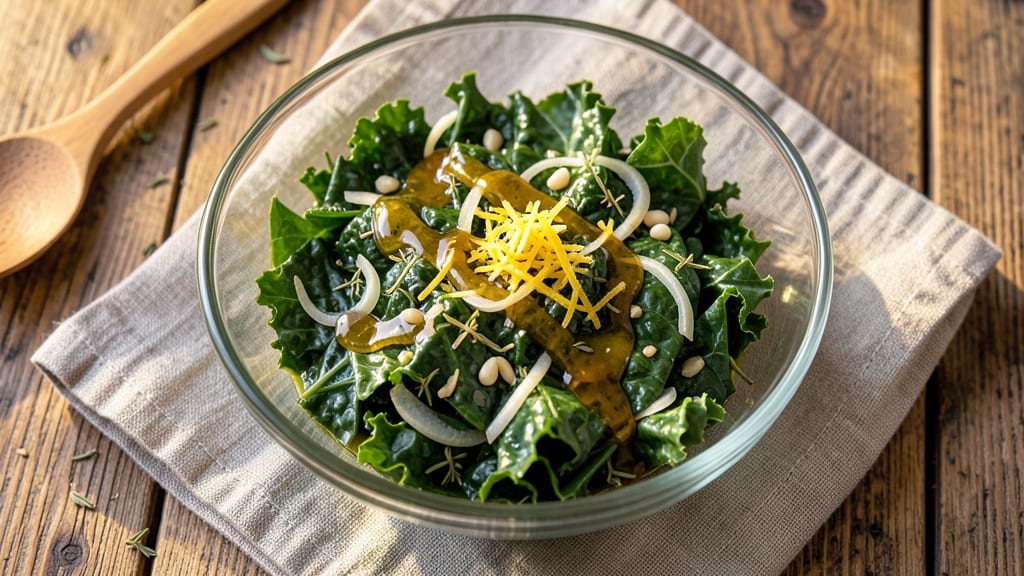
This CFA kale salad dressing recipe delivers the perfect balance of bright citrus, nutty depth, and tangy Dijon—transforming simple greens into a restaurant-worthy dish. The secret lies in a bold lemon-Dijon vinaigrette that cuts through kale's earthiness while adding layers of flavor with garlic, shallots, and a touch of honey.
I developed this after years of testing dressings that either overwhelmed or underwhelmed kale's natural bite.
The dressing relies on a simple yet powerful technique: emulsifying high-quality olive oil with lemon juice and Dijon mustard creates a silky texture that clings to leaves without pooling.
A pinch of salt and a splash of honey balance acidity, while fresh herbs like thyme or parsley add aromatic freshness. This recipe is vegetarian, gluten-free, and ready in just 5 minutes—no fancy equipment required.
What makes this dressing exceptional is its versatility. It elevates kale salads, grain bowls, or even roasted vegetables, delivering a nutty, tangy punch that stands up to bold flavors. The dressing keeps well in the fridge for up to 5 days, making it ideal for meal prep.
For extra depth, whisk in a spoonful of tahini or a dash of smoked paprika before serving.
Pair it with massaged kale, toasted nuts, and crispy chickpeas for a complete salad, or drizzle over grilled chicken or fish for a bright, flavorful finish. The key to success? Fresh ingredients and proper emulsification—no shortcuts here. Let’s make dressing that turns salads into showstoppers.
Ingredients for cfa kale salad dressing
Nine ingredients transform kale into a restaurant-worthy dish with bold lemon-Dijon brightness.
| Ingredient | Amount | Notes |
|---|---|---|
| Extra-Virgin Olive Oil 🫒 | ¾ cup | Cold-pressed, fruity variety |
| Fresh Lemon Juice 🍋 | ⅓ cup | Freshly squeezed, no pulp |
| Dijon Mustard 🍯 | 2 tbsp | High-quality, whole-grain |
| Raw Honey 🍯 | 2 tbsp | Local, unprocessed preferred |
| Shallots 🧅 | 2 whole | Finely minced, not sliced |
| Garlic Cloves 🧄 | 2 cloves | Freshly minced, not powdered |
| Fresh Thyme Leaves 🌿 | ¼ cup | Finely chopped, stems removed |
| Diamond Crystal Kosher Salt 🧂 | ½ tsp | Fine grain preferred |
| Freshly Ground Black Pepper 🌶️ | ¼ tsp | Cracked peppercorns preferred |
The olive oil is non-negotiable—high-quality extra-virgin with fruity notes creates that nutty depth the dressing needs. Whole Foods or local olive oil shops carry the best varieties, but even a good grocery store brand works if it's labeled 'cold-pressed.' Fresh lemon juice should be strained through a fine-mesh sieve to remove pulp, which can make the dressing gritty. The Dijon mustard I use is Maille or whole-grain brands—they emulsify better than powdered versions. Shallots add subtle sweetness that rounds out the acidity, and organic markets often have pre-minced options to save time.
No Dijon? Whisk together 1 tbsp whole-grain mustard with 1 tbsp water as a substitute. Short on honey? Maple syrup works at a 1:1 ratio, though it adds a different depth. The thyme can be swapped for fresh parsley at double the amount, but it loses some of the dressing's signature aroma. For extra richness, add 1 tbsp tahini—it blends beautifully and adds a nutty layer. If you prefer heat, smoked paprika at 1/4 tsp enhances the complexity without overpowering. The garlic should be finely minced, not pressed—it burns easily when emulsified.
This dressing emulsifies perfectly when whisked vigorously, but it separates if left sitting. To prevent this, store it in a sealed jar with the oil layer on top—just shake before using. Keeps fresh for up to 5 days in the fridge, though the flavor peaks within 2-3 days. For longer storage, transfer to an airtight container and freeze for up to 3 months. Thaw in the fridge overnight—never microwave, as it breaks the emulsion. The dressing doubles as a marinade for grilled vegetables or proteins, making it a versatile pantry staple.
Why You'll Love This Recipe
- Five-Ingredient Magic: I swear by this combo—just oil, lemon, mustard, honey, and shallots. No fancy gadgets, no measuring cups (I eyeball it), and it still tastes like I slaved over it.
- Bright and Balanced: That honey cuts the sharpness of the shallots while the lemon keeps it fresh. It’s the kind of dressing that makes kale taste like a treat, not a chore.
- Weeknight Workhorse: Slather it on salads, drizzle it over grilled chicken, or toss it with roasted veggies. Honestly, I’ve used it for everything from lunch prep to last-minute dinner sauces.
- No-Waste Win: Shallots last forever, honey never spoils, and olive oil? You’ll use it before it goes bad. Plus, a little goes a long way—this batch stretches to feed two for a week.
Step-by-step instructions for bold lemon-Dijon vinaigrette
This vinaigrette delivers complex flavor with precise technique and fresh ingredients.
Prepare the Aromatic Base
In a small mixing bowl, combine the 2 whole shallots and 2 cloves garlic, both finely minced. The shallots should be so small they nearly dissolve when stirred—they'll contribute sweet, oniony depth without bitterness. Add the 0.25 cup fresh thyme leaves, chopped into tiny pieces, and set aside. This aromatic blend forms the flavor foundation, so take your time with the mincing for even distribution.
I like to use a microplane for the garlic and shallots—it creates a fine, even texture that emulsifies perfectly with the oil. If you don't have one, a sharp knife and careful chopping will work, but aim for pieces smaller than a grain of rice. This step ensures the dressing won't separate later, as the finely textured aromatics help bind the oil and vinegar.
Whisk Wet Ingredients Together
In a separate bowl, whisk together the 0.33 cup fresh lemon juice, 2 tbsp Dijon mustard, 2 tbsp raw honey, 0.5 tsp kosher salt, and 0.25 tsp black pepper. The lemon juice should be freshly squeezed and strained to remove any pulp, which could make the dressing grainy. Whisk vigorously for 30 seconds until the honey and mustard are completely dissolved and the mixture is smooth.
This is where the dressing's balance begins. The Dijon mustard acts as an emulsifier, while the honey rounds out the acidity of the lemon. Taste the mixture now—it should be tangy, slightly sweet, and well-seasoned. If it needs more salt, add it now, but don't overdo it; the olive oil will mellow the flavors. The texture should be thick but pourable, like a loose syrup.
Gradually Incorporate the Olive Oil
With the whisk still in the bowl, slowly drizzle in the 0.75 cup extra-virgin olive oil while whisking continuously. Start with just a few drops, then gradually increase the flow as the mixture begins to emulsify. This slow incorporation is critical—it prevents the oil from breaking the emulsion and ensures a silky, stable dressing.
Keep whisking for 2-3 minutes after all the oil is added. The dressing should thicken noticeably and take on a glossy sheen. If it looks too thin, whisk in 1 tsp more Dijon mustard to help bind it. If it's too thick, add 1 tsp water to loosen it. The goal is a dressing that coats the back of a spoon but still pours smoothly over greens.
Add the Aromatics and Final Adjustments
Now, transfer the emulsified dressing to the bowl with the shallot, garlic, and thyme mixture. Gently fold everything together with a rubber spatula, being careful not to overmix. The aromatics should disperse evenly throughout the dressing, infusing it with their flavors. Let the dressing sit for 10 minutes at room temperature—this allows the flavors to meld and the emulsion to fully stabilize.
Before serving, taste and make any final adjustments. If the dressing needs more brightness, add 1 tsp more lemon juice. For extra depth, stir in ½ tsp more honey. The dressing should be perfectly balanced—bright from the lemon, rich from the olive oil, with a subtle sweetness and herbal notes. This vinaigrette keeps well in the refrigerator for up to 5 days, making it ideal for meal prep.
Pro Tips For Making Cfa Kale Salad Dressing
- MINCE THOSE SHALLOTS: Fine dice those shallots—no big chunks—so they dissolve into silkiness instead of sitting like tiny rocks at the bottom. I used to chop them roughly, but now I take the extra 30 seconds to make them nearly invisible; the dressing tastes smoother and brighter.
- LEMON JUICE FROM THE PULP: Squeeze the lemons hard and press the pulp through a fine-mesh strainer to get every last drop—no watery, weak dressing here. I learned this after making a batch that tasted disappointingly mild; now I treat the strainer like a second skin for the citrus.
- WHISK IN STAGES: Start with the mustard and honey, then slowly drizzle in the olive oil while whisking like you’re trying to win a race. Adding oil all at once just makes a gloopy mess—this way, the emulsion stays light and emulsifies properly. (Yes, even if you’re impatient like me.)
- TASTE BEFORE THE HONEY: Add the honey last—after adjusting salt and lemon—so you don’t over-sweeten by accident. I once ruined a batch by dumping honey in early, then realized the dressing needed more acid. Now I taste as I go, starting with the mustard and lemon first.
Make-ahead tips for this dish
Prep Ahead Strategy
Make this dressing 2-3 days in advance for deeper flavor development. Store it in a glass jar with a tight-sealing lid—glass preserves freshness better than plastic. I like using Le Parfait jars because they’re airtight and stackable. The dressing actually tastes better after resting, as the flavors meld and the emulsion stabilizes. Just
Freezing for Later
For longer storage, freeze the dressing in ice cube trays. Once frozen, transfer the cubes to a freezer-safe bag with the date labeled. Thaw overnight in the fridge—never microwave, as it breaks the emulsion. This method works perfectly for meal prep: grab a cube or two, let it sit at room temperature for 10 minutes, then whisk with a splash of water to restore consistency. It’s ideal for busy weeks when fresh ingredients aren’t an option.
Batch Prep Tips
Double or triple the recipe if you’re prepping for the week. Store in quart-sized mason jars in the fridge, and label each with the date. The dressing stays fresh for up to 5 days, but I find the flavor peaks at day 3.
To save space, use collapsible silicone containers—they’re perfect for packing in lunchboxes or storing in tight fridge shelves. Just shake well before using to re-emulsify.
Reviving Separated Dressing
If your dressing separates after refrigeration, don’t toss it! Place the jar in a bowl of warm water for 5 minutes to gently warm it, then whisk vigorously for 2-3 minutes. The heat helps the emulsion re-form.
If it’s still stubborn, add 1 tsp Dijon mustard or a splash of water and whisk again. This trick works every time—no need to start over. 🔥
Portion Control
Use small ramekins or silicone molds to portion individual servings. This is especially helpful if you’re dressing multiple salads or prepping for a crowd. Store the portions in the fridge, and they’ll stay fresh for 3-4 days.
When ready to use, simply pop out a portion, give it a quick shake, and drizzle away. It’s a game-changer for busy mornings or last-minute lunches.
Flavor Boost Before Serving
Before using prepped dressing, boost its brightness with a pinch of salt or a squeeze of fresh lemon juice. For extra depth, whisk in ½ tsp smoked paprika or a dash of hot honey.
These additions elevate the dressing without altering its base recipe. It’s a great way to customize the flavor based on what you’re serving—whether it’s a hearty kale salad or grilled proteins. ✨
Nutrition facts
Frequently asked questions
Can I use white wine vinegar instead of lemon juice?
You can substitute ¼ cup white wine vinegar for the lemon juice, but the flavor will be more acidic and less bright. For balance, reduce the Dijon mustard to 1 tbsp and add 1 tsp honey to soften the sharpness. The dressing will still work well, but it’ll lack the citrusy freshness that pairs so beautifully with kale.
What if my dressing separates after refrigeration?
This happens when the emulsion breaks, but it’s easily fixed! Place the jar in a bowl of warm water for 5 minutes, then whisk vigorously for 2-3 minutes. If it’s still stubborn, add 1 tsp Dijon mustard or a splash of water and whisk again. The dressing will re-emulsify perfectly—no need to start over!
How long does this dressing last in the fridge?
The dressing stays fresh for up to 5 days when stored in an airtight container. For best flavor, use it within 3 days. To extend its shelf life, freeze it in ice cube trays—thaw overnight in the fridge and whisk with a splash of water to restore consistency.
Can I make this dressing without Dijon mustard?
Yes! Mix 1 tbsp whole-grain mustard with 1 tbsp water as a substitute. For a tangier option, use 1 tbsp apple cider vinegar instead of Dijon. The dressing will still emulsify, though it may be slightly thinner. Adjust the honey to taste for balance.
What’s the best way to store leftovers?
Store in a glass jar with a tight-sealing lid in the fridge. Keep the oil layer on top to prevent oxidation. For longer storage, freeze in ice cube trays—thaw overnight in the fridge before using. Portion into small containers to avoid waste and make it easy to grab for quick meals.