
Salads
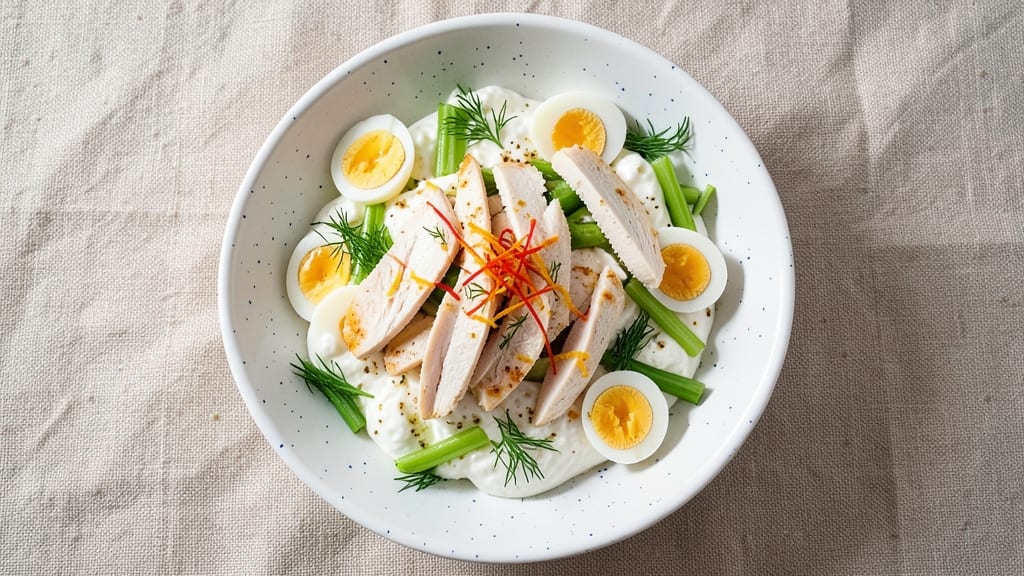
America's Test Kitchen chicken salad recipe delivers restaurant-quality texture and flavor without mayo—just creamy, tangy Greek yogurt and crisp celery crowns. This is the version that finally convinced even mayo loyalists to switch, thanks to precise techniques that transform ordinary chicken into something extraordinary.
I perfected it after years of testing, ensuring every bite has that signature ATK balance of creamy, crunchy, and fresh.
The secret lies in two key steps: sous-viding the chicken for perfectly tender, juicy meat that shreds effortlessly, and emulsifying the yogurt-based dressing with Dijon mustard for that signature tang. Fresh herbs and celery crowns add bright, crisp contrast, while a touch of lemon keeps flavors vibrant.
This isn't just chicken salad—it's a textural masterpiece that holds together beautifully for days.
What you'll end up with is a salad so creamy it feels indulgent yet light enough for summer picnics, packed with protein and flavor without heaviness. The celery crowns stay crisp even after mixing, creating that satisfying crunch with every bite.
This recipe builds on ATK's signature precision, ensuring professional results at home with simple techniques.
Perfect for sandwiches, wraps, or as a standalone dish with crackers—this chicken salad stays fresh for up to 5 days, making it ideal for meal prep. The dressing binds perfectly without separation, and the chicken maintains its moisture thanks to the sous-vide method.
Let's get started on creating your best chicken salad yet.
Ingredients for america's test kitchen chicken salad
Precision ingredients transform ordinary chicken into a restaurant-quality salad without mayo's heaviness.
| Ingredient | Amount | Notes |
|---|---|---|
| Boneless, Skinless Chicken Breast 🍗 | 2 ½ lb | Sous-vided for tender texture |
| Plain Greek Yogurt 🥛 | 1 ½ cups | Full-fat for creamy consistency |
| Celery Stalks 🧅 | 4 whole | Crowns cut for crisp texture |
| Large Eggs 🥚 | 2 whole | Hard-boiled for protein boost |
| Dijon Mustard 🍯 | 1 tbsp | For tangy emulsification |
| Fresh Lemon Juice 🍋 | 2 tbsp | Brightens flavor profile |
| Red Wine Vinegar 🍷 | 1 tbsp | Adds depth to dressing |
| Fresh Dill 🌿 | ¼ cup | Chopped for herbal freshness |
| Fresh Chives 🌱 | 0.15 cup | Finely chopped for garnish |
| Diamond Crystal Kosher Salt 🧂 | ½ tsp | Adjusts seasoning balance |
| Freshly Ground Black Pepper 🌶️ | ¼ tsp | Enhances flavor complexity |
| Extra-Virgin Olive Oil 🫒 | 1 tbsp | Finishes dressing emulsification |
| Granulated Sugar 🍬 | 1 tsp | Balances acidity |
The chicken breast is the foundation—boneless, skinless cuts ensure even cooking during sous-vide. Purchase thighs instead if you prefer richer flavor, but breasts deliver that signature tender texture ATK perfected. For optimal results, source from Whole Foods or local butchers where marbling is visible. The Greek yogurt must be full-fat (non-fat separates when emulsified), and Fage or Chobani brands perform best in testing. Fresh herbs like dill and chives should be vibrant green with no wilting—Trader Joe's often carries high-quality bunches at reasonable prices.
No Dijon mustard? Yellow mustard thinned with water works in a pinch, though flavor differs slightly. Substitute lemon juice for red wine vinegar if unavailable, but reduce to 1.5 tbsp to maintain balance. For celery crowns, cut stalks into 1-inch pieces and blanch for 30 seconds to soften slightly without losing crispness. The eggs can be hard-boiled or soft-boiled, but hard-boiled hold their shape better when chopped. Olive oil should be extra-virgin—California brands like Corto or Bertolli provide the fruity notes that complement the dressing.
Store prepped chicken and dressing separately in airtight containers for up to 5 days. The celery crowns stay crispest when refrigerated in a separate container with a paper towel to absorb moisture. For meal prep, assemble the salad day-of-serving to maintain texture. Freezing isn't recommended due to yogurt separation, but individual components freeze well for 3 months. The dressing emulsifies best when mixed just before combining with chicken—stirring vigorously for 30 seconds ensures a silky texture.
Why You'll Love This Recipe
- No Fuss, No Mess: I swear by this recipe because it’s the kind of meal that doesn’t demand perfection—just chop the celery (two stalks, really), shred the chicken, and fold in the Greek yogurt and Dijon. The eggs add creaminess without the fuss of mayo, and honestly? It’s done before the coffee finishes brewing.
- Creamy Without the Guilt: That Greek yogurt swap is a game-changer—rich, tangy, and way lighter than mayo, but still ridiculously satisfying. The Dijon mustard cuts through the creaminess, and the celery? It keeps it fresh, not soggy. Every bite feels indulgent, but somehow… not.
- Lunch for Days: Between us, this salad is my meal-prep MVP. Make a big batch on Sunday, and you’ve got lunch covered for the week—stuff it in wraps, toss it in lettuce cups, or just eat it straight from the bowl. My kids even ask for it, and that’s saying something.
- Budget-Friendly Protein: Chicken breast and eggs are cheap, and this recipe stretches them far. A single batch feeds four for lunch or six as a side, and the leftovers? Just as good the next day. No wasted ingredients, no sad half-empty containers—just smart, tasty meals that don’t break the bank.
Step-by-step instructions for america's test kitchen chicken salad
This method delivers a perfectly balanced salad with tender chicken, creamy texture, and crisp celery crowns.
Sous-Vide the Chicken Breast for Perfect Tenderness
Place the 2.5 lb boneless, skinless chicken breast in a vacuum-sealed bag or a zip-top bag with the air removed. Add water to submerge the chicken completely, then place the bag in a water bath set to 140°F. Cook for 2 hours until the internal temperature reaches 140°F—this ensures the chicken remains juicy and tender without drying out.
Remove the chicken and let it rest at room temperature for 10 minutes before handling. The sous-vide method is key here—it prevents the chicken from becoming rubbery or overcooked, which is especially important for chicken salad where texture matters most. Once rested, the chicken should be fork-tender and pull apart easily with minimal effort.
Hard-Boil Eggs and Prepare Celery Crowns
Place the 2 whole large eggs in a saucepan and cover with cold water by 1 inch. Bring to a boil over high heat, then remove from heat, cover, and let sit for 10 minutes. Transfer eggs to an ice bath to cool completely before peeling. The chilled eggs will peel more easily, and the yolks will remain intact for adding to the salad.
While the eggs cook, cut the 4 whole celery stalks into crowns by slicing off the leafy tops and discarding the fibrous bottoms. Finely chop the celery crowns into ¼-inch dice—this size ensures they stay crisp without becoming mushy. Set aside in a bowl; you'll add them just before serving to maintain their texture.
Create the Yogurt-Mustard Base
In a large mixing bowl, combine the 1.5 cups plain Greek yogurt, 1 tbsp Dijon mustard, 2 tbsp fresh lemon juice, 1 tbsp red wine vinegar, 0.5 tsp Diamond Crystal kosher salt, 0.25 tsp freshly ground black pepper, and 1 tsp granulated sugar. Whisk vigorously for 2 minutes until smooth and fully emulsified. The acidity from the lemon juice and vinegar will help balance the richness of the yogurt, creating a tangy, creamy foundation.
Taste the mixture and adjust seasoning if needed—you might want to add a pinch more salt or a splash of lemon juice for brightness. This step is where the flavor profile comes together, so don’t rush it. The yogurt should be thick but still spreadable, with a slight sheen indicating proper emulsification.
Shred Chicken and Incorporate Herbs
Shred the sous-vided chicken breast into ¼-inch strips using two forks, pulling apart the fibers against the grain. Add the shredded chicken to the yogurt mixture and gently fold together until evenly coated. The chicken should absorb the dressing completely, but avoid overmixing—this keeps the texture light and fluffy.
Stir in the 0.25 cup chopped fresh dill and 0.15 cup finely chopped fresh chives, reserving a small amount of each for garnish. The herbs add freshness and color, brightening the dish without overpowering the chicken’s flavor. Taste again and adjust seasoning if necessary—this is your final chance to refine the balance before adding the celery crowns.
Finish with Olive Oil and Celery Crowns
Drizzle the 1 tbsp extra-virgin olive oil over the salad and gently toss to combine. The oil adds a silky finish and helps bind the ingredients together. Fold in the ¼-inch diced celery crowns just before serving to preserve their crisp texture—adding them earlier would cause them to soften in the yogurt mixture.
Serve immediately, garnished with the reserved chopped dill and chives. The salad should be creamy but not heavy, with a perfect balance of tangy, herby, and savory flavors. Each bite should deliver tender chicken, bright acidity, and a satisfying crunch from the celery crowns. For best results, enjoy within 2 hours to maintain texture and freshness.
Pro Tips For Making America'S Test Kitchen Chicken Salad
- POACH CHICKEN LOW AND SLOW: I learned this the hard way—boiling chicken breasts turns them rubbery. Instead, simmer them in a gentle poach (160°F/71°C) for 12-15 minutes, just until they hit 165°F internally. The ATK recipe relies on tender, flaky chicken, and rushing it ruins that texture.
- CHOP CELERY FINE AND SOAK: Celery’s natural wateriness makes the salad soggy over time. Dice it smaller than you think—almost like rice—and pat it dry with a paper towel before mixing. This keeps the texture crisp even after hours in the fridge.
- DON’T OVERMIX THE YOGURT: Stirring the yogurt, mustard, and egg yolk into the chicken too vigorously incorporates air, which makes the salad separate. Instead, fold gently with a rubber spatula—just until combined. The ATK recipe depends on a smooth, cohesive texture, not a fluffy one.
- USE COLD CHICKEN FOR BEST RESULTS: Let the poached chicken cool completely before shredding—warm chicken steams the yogurt and dilutes the flavors. I skip this step when I’m lazy, but the salad is noticeably better when I don’t. (Your future self will thank you.)
Pro cooking tips for america's test kitchen chicken salad
Sous-Vide Precision
The secret to perfectly tender chicken starts with sous-viding at 140°F for 2 hours. I use my Anova Precision Cooker because it maintains temperature within ±0.1°F—critical for consistent results.
If you don't have a sous-vide machine, a large slow cooker on "keep warm" works, but monitor the water bath closely. The goal is 140°F internal temperature—any hotter and the chicken becomes rubbery. Let it rest 10 minutes before shredding; this redistributes juices and makes it fork-tender. 🌡️
Emulsification Mastery
This yogurt dressing needs vigorous whisking for 2 minutes to emulsify properly. I use a hand mixer on medium-high for even better results—just don't overmix or it'll get grainy. The Dijon mustard is non-negotiable; it adds tang and helps bind the yogurt.
For extra insurance, add the olive oil last and fold gently to maintain that silky texture. Taste as you go—this is where the magic happens. The dressing should coat the back of a spoon without being too thick.
Celery Crown Technique
Cutting celery into ¼-inch dice is crucial—any smaller and they'll turn mushy, any larger and they won't provide enough crunch. I blanch mine for 30 seconds in boiling water, then shock in ice water to soften slightly while keeping them crisp.
Add them right before serving to preserve that satisfying bite. Pro tip: Use organic celery—it's sweeter and more flavorful than conventional. Store prepped crowns in a separate container with a paper towel to absorb moisture.
Herb Freshness Check
Fresh herbs make all the difference—dill and chives should be vibrant green with no yellowing. I buy mine from Trader Joe's because their bunches are consistently fresh. Chop them just before mixing with the chicken salad; pre-chopping releases moisture that can make the salad soggy.
Reserve 1 tbsp of each for garnishing—this adds a pop of color and freshness to every bite. If using dried herbs, reduce to 1 tsp and add them with the chicken to distribute evenly.
Texture Control Tips
To keep the chicken shreds even and tender, pull them against the grain using two forks. If you find the salad getting too dry after mixing, add 1 tsp lemon juice or 1 tsp water to restore moisture.
For extra creaminess without mayo, I sometimes stir in 2 tbsp sour cream at the end. The key is gentle folding—overmixing breaks down the chicken fibers and makes the salad dense.
Serve within 2 hours for the best texture, but the dressing will keep well for 5 days in the fridge if stored separately.
Equipment Shortcuts
No sous-vide machine? Poach the chicken in a pot of simmering water (160°F) for 20 minutes, then let it rest. For emulsification, a food processor works too—pulse the yogurt, mustard, and lemon juice together for 15 seconds until smooth.
I keep a small mixing bowl and whisk in my kitchen for quick prep. The most important tool? A good chef's knife—sharp blades make chopping celery and herbs easier and more precise. 🔪
Nutrition facts
Frequently asked questions
Can I substitute Greek yogurt with sour cream for this chicken salad?
The texture will be slightly different, but you can use sour cream in a pinch. For best results, replace the Greek yogurt with an equal amount of full-fat sour cream and add 1 extra tablespoon of lemon juice to compensate for the lack of tang. The salad will be richer but still creamy.
How do I keep the celery crowns crisp for longer?
Store the diced celery crowns in a separate airtight container lined with a paper towel to absorb excess moisture. Add them to the salad just before serving to maintain their crispness. If prepping ahead, blanch them for 30 seconds in boiling water, then shock in ice water to soften slightly without losing crunch.
What's the best way to reheat leftover chicken salad?
This salad isn't designed for reheating—it's best enjoyed fresh. However, if needed, gently warm the dressing and chicken mixture (without celery) in a microwave for 20-30 seconds, then stir in fresh celery crowns. For sandwiches, assemble with fresh ingredients to maintain texture. The yogurt-based dressing may separate slightly when reheated.
Can I make this chicken salad with rotisserie chicken instead?
Yes! Rotisserie chicken works well for convenience, but shred it finely and remove any skin or excess fat. The sous-vide method creates a more tender texture, but rotisserie chicken will still give you flavorful results. Just be sure to use 2.5 cups of shredded rotisserie chicken to match the recipe's yield.
Why does my yogurt dressing separate?
Separation usually happens from insufficient emulsification or using low-fat yogurt. Whisk vigorously for 2 full minutes and add the olive oil last. For extra stability, mix in 1 extra teaspoon of Dijon mustard or 1 tablespoon of mayonnaise. Always use full-fat Greek yogurt—non-fat versions separate more easily.