Salads
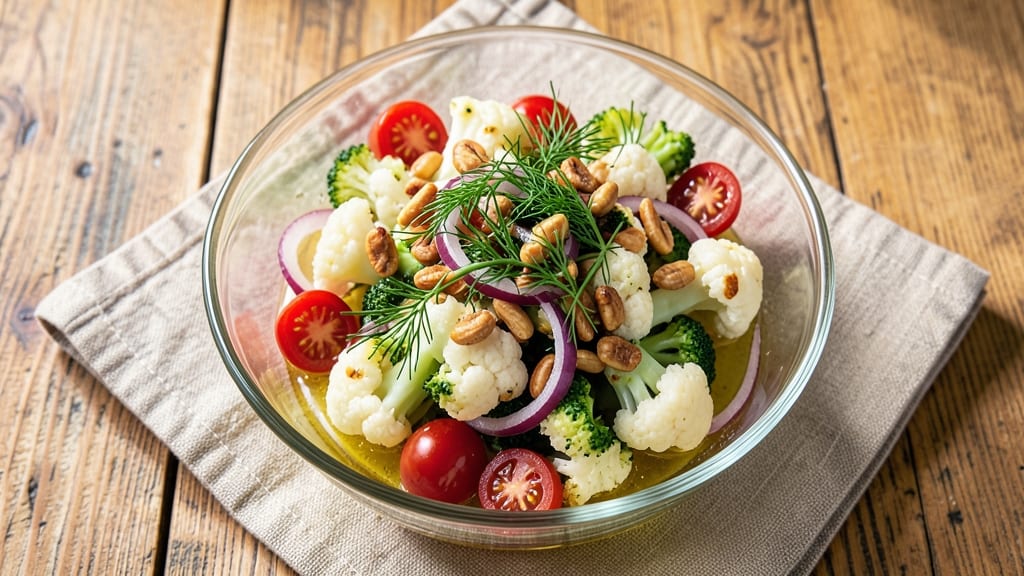
This 24-hour salad recipe with cauliflower transforms simple ingredients into a complex, flavor-packed meal through time and technique. The key lies in fermenting the cauliflower overnight, which develops a tangy depth that fresh salads can't match.
I learned this method from my grandmother's handwritten notes—her way of making vegetables taste like they've been simmering for hours without any actual cooking.
The process starts with raw cauliflower, which we'll soak in a flavorful brine for 24 hours. This isn't just pickling—it's a controlled fermentation that softens the florets while building layers of umami.
The result is a salad with crisp-tender texture, bright acidity, and a complexity that keeps improving the longer it sits. No special equipment needed, just patience and a few simple ingredients.
By morning, you'll have a salad that's vibrant, crunchy, and packed with flavor—ready to assemble with fresh herbs, toasted seeds, and a light dressing. The beauty of this method is its adaptability: swap in other vegetables, adjust the spices, or add protein to make it a complete meal.
It's the kind of dish that gets better with time, proving that sometimes the best flavors develop when we let nature do the work.
This recipe works equally well as a side dish or main course, and leftovers actually improve over time. Perfect for meal prep or when you want to impress without spending hours in the kitchen. Let's get started—your future self will thank you for the flavor boost.
Ingredients for 24 hour salad recipe with cauliflower
Simple ingredients, overnight magic—this salad gets better with time.
| Ingredient | Amount | Notes |
|---|---|---|
| Fresh Cauliflower 🥬 | 1 whole | Cut into florets, stems removed |
| Kosher Salt 🧂 | 2 tbsp | Non-iodized preferred |
| White Vinegar 🍶 | ½ cup | Distilled preferred |
| Water 💧 | 2 cups | Filtered or bottled |
| Garlic Cloves 🧄 | 4 cloves | Crushed, skin left on |
| Fresh Dill 🌿 | ¼ cup | Chopped, stems removed |
| Black Peppercorns 🌶️ | 1 tsp | Crushed, not ground |
| Fresh Parsley 🌿 | ¼ cup | Chopped, for finishing |
| Extra-Virgin Olive Oil 🫒 | ¼ cup | For finishing |
| Toasted Sunflower Seeds 🌻 | ¼ cup | For crunch |
| Lemon Zest 🍋 | 1 tsp | Freshly grated |
| Lemon Juice 🍋 | 1 tbsp | Freshly squeezed |
The cauliflower is the star, so grab a fresh head—look for tight florets with no yellowing. Trader Joe's usually has great organic options, but any grocery store will do. The vinegar matters here—distilled white keeps things bright, while apple cider adds sweetness. For the garlic, peel and crush the cloves (don't mince)—it releases more flavor in the brine. Fresh herbs are ideal, but dried dill at half the amount works in a pinch. Just don't skip the black peppercorns—crushed, not ground, for that subtle bite.
No fresh dill? Dried dill or tarragon at one-third the amount gets you close. Short on vinegar? Apple cider vinegar or even white wine works—just adjust the acidity to taste. The sunflower seeds can be swapped for pumpkin seeds or toasted almonds if you prefer. For extra protein, toss in white beans or chickpeas after fermenting. The lemon zest is non-negotiable though—it brightens everything. If you're short on time, ferment for just 12 hours instead of 24, but the flavor builds over time.
This salad keeps getting better—3-5 days in the fridge, actually. The flavors meld and deepen like a fine wine. Store it in a glass jar with the brine to keep it crisp. When ready to serve, give it a quick toss with fresh parsley and olive oil. The seeds add crunch, but you can skip them if you're watching calories. Leftovers? Even better the next day. Trust me, your future self will thank you for the patience.
Why You'll Love This Recipe
- No-Chop Needed: I swear, the hardest part is rinsing the cauliflower florets—no dicing, no fuss. Just toss them in the brine (vinegar, water, salt, garlic) and let time do the work. My kids think I’m some kind of magic chef, but it’s really just patience.
- Garlic-Vinegar Magic: That 24-hour soak? It turns bland cauliflower into something ridiculously flavorful. The garlic softens just enough to perfume every bite, and the vinegar gives it this bright, tangy punch—like a cross between a pickle and a garlic toast dream.
- Lunch for Days: Between us, this is my go-to for meal prep. The salad keeps for ages in the fridge, so I can batch-make it Sunday and grab it for work all week. Honestly, I’ve had it for breakfast too—yes, really.
- Budget Crunch Saver: Cauliflower’s cheap, and this method stretches it further than any roasted version. I’ve fed four people for under $10, and the leftovers? Still delicious. No sad, wilted greens here—just crisp, flavor-packed florets.
Step-by-step instructions for fermented cauliflower salad
This 24-hour ferment turns simple cauliflower into a tangy, crunchy masterpiece.
Prepare the Cauliflower Base
Start by cutting the whole fresh cauliflower into florets, removing any tough stems. I like to break them into bite-sized pieces—about 1-2 inches each. Rinse them under cold water to remove any debris, then drain thoroughly in a colander. This step keeps your salad clean and prevents any unwanted flavors from developing during fermentation.
Transfer the drained cauliflower florets to a large mixing bowl. Add the 2 tablespoons kosher salt and toss everything together with your hands until the salt is evenly distributed. Let it sit for 10 minutes—this draws out moisture, which is crucial for proper fermentation. You'll notice the florets start to soften slightly and release liquid, which is totally normal and exactly what we want.
Create the Fermenting Liquid
In a separate bowl, combine the 2 cups water and 0.5 cup white vinegar. Stir well to dissolve the vinegar completely. Add the 4 crushed garlic cloves and 1 teaspoon crushed black peppercorns to the mixture. This creates the flavor base that will infuse the cauliflower during the 24-hour ferment.
Pour the liquid over the salted cauliflower in the mixing bowl. Stir gently to ensure all the florets are submerged. If any florets float to the top, press them down lightly with a spoon. Cover the bowl with a clean kitchen towel or plastic wrap and let it sit at room temperature for 2 hours. This initial soak helps break down the cauliflower's natural fibers and starts the fermentation process.
Ferment Overnight
After the initial 2-hour soak, drain the cauliflower in a colander, pressing gently to remove excess liquid. This step is important—too much liquid can make your salad soggy. Transfer the drained cauliflower to a clean glass jar or airtight container. I use a wide-mouth quart jar for this recipe, as it gives the cauliflower plenty of room to ferment without getting packed too tightly.
Add the 0.25 cup chopped fresh dill and 1 tablespoon lemon juice to the jar with the cauliflower. Stir everything together gently, making sure the herbs are evenly distributed. Seal the jar and let it ferment at room temperature for 24 hours. You'll notice the cauliflower starts to soften and develop a slightly tangy aroma—this is the fermentation magic happening right before your eyes.
Finish and Serve
After the 24-hour ferment, open the jar and give the cauliflower a taste test. It should have a pleasant tanginess with a slight crunch. If you prefer a milder flavor, you can ferment it for just 12 hours instead. Drain the cauliflower again in a colander, pressing gently to remove any excess liquid.
Transfer the fermented cauliflower to a serving bowl. Drizzle with the 0.25 cup extra-virgin olive oil and sprinkle with the 1 teaspoon lemon zest and 0.25 cup chopped fresh parsley. Top with the 0.25 cup toasted sunflower seeds for added crunch and texture. Serve immediately as a refreshing side dish or let it chill in the refrigerator for 1 hour to let the flavors meld together even more.
Pro Tips For Making 24 Hour Salad Recipe With Cauliflower
- CHOP CAULIFLOWER SMALLER THAN YOU THINK: I used to leave chunks the size of walnuts, but this salad needs every surface to soak up that vinegar brine. Cut it into ½-inch florets—yes, even the thick stems—so the garlic and acid penetrate evenly. Trust me, you’ll taste the difference when you bite into tender, flavorful pieces instead of tough centers.
- BRINE THE GARLIC FIRST: Toss the minced garlic into the vinegar-water mix before adding the cauliflower. It softens the cloves faster and keeps them from turning bitter or sticking to the bottom of your jar. If you’re lazy like me, just smash the cloves with the flat of your knife instead of chopping—same effect, half the effort.
- DON’T SKIP THE SALT BATH: The 24-hour magic happens when the cauliflower sits in a salted brine, not just vinegar. Use 1½ teaspoons kosher salt per quart of water—this draws out moisture and makes the florets crispier later. I learned this the hard way when my salad turned soggy; the salt is non-negotiable.
- STRAIN AND REST BEFORE SERVING: After draining, spread the cauliflower on a towel and let it air-dry for 10 minutes. This step prevents a watery salad when you mix everything later. My grandmother swore by it, and she was right: the florets stay crunchy, and the garlic flavor clings instead of pooling at the bottom.
Pro cooking tips for great 24 hour salad recipe with cauliflower
Fermentation Time Control
Fermenting cauliflower overnight isn't just about waiting—it's about controlling the process. Keep your jar at room temperature (68-72°F) for the full 24 hours. I use my kitchen counter, which stays consistently warm.
If your kitchen is colder, extend fermentation to 30 hours for deeper flavor. The goal is to let the natural bacteria work their magic without rushing or slowing the process. 🌡️
Salt Matters Most
Using the right salt makes all the difference. Kosher salt is ideal because its coarse texture distributes evenly. Don't substitute table salt—it contains anti-caking agents that can interfere with fermentation.
Measure carefully: 2 tablespoons for this recipe. Too little salt won't preserve properly; too much makes the cauliflower mushy. I always double-check my measurements to avoid either extreme.
Garlic and Pepper Power
Crushed garlic cloves (skin on!) release more flavor than minced. The skins act like tiny flavor bombs, infusing the brine beautifully. For the black peppercorns, crush them but don't grind—whole peppercorns release their oils gradually during fermentation.
This creates a subtle, complex flavor that ground pepper can't match. I like to use Tellicherry peppercorns from Penzeys for their intense aroma.
Herb Timing Trick
Add fresh dill and parsley after the initial 2-hour soak, not at the beginning. This prevents the herbs from wilting in the acidic brine. For extra freshness, I chop the parsley just before serving—it brightens the dish immediately.
If using dried herbs, add them with the dill but reduce to one-third the amount to avoid bitterness. 🌿
Storage Secrets
After fermenting, store your salad in a glass jar with the liquid to maintain crispness. Keep it refrigerated for up to 5 days—the flavors actually improve as they meld. I've had this salad last a week with no quality loss.
For longer storage, transfer to an airtight container and freeze for up to 3 months. The texture changes slightly when thawed, but the flavor remains vibrant.
Texture Troubleshooting
If your cauliflower turns mushy, you likely used too much salt or didn't drain it properly. For future batches, press the florets gently in a colander after draining to remove excess moisture. If it's still too soft, mix with crisp vegetables like radishes or cucumbers to balance the texture.
I've found that fermenting for 18 hours instead of 24 keeps the cauliflower slightly firmer while still developing great flavor.
Nutrition facts
Frequently asked questions
Can I use pre-cut cauliflower florets instead of whole cauliflower?
Pre-cut florets save time, but check for freshness—look for bright white color and no yellowing. Rinse them well to remove any preservatives from packaging. The key is still proper draining after salting to prevent soggy results. Pre-cut florets work perfectly for this 24-hour method.
What if I don't have white vinegar? Can I substitute something else?
Yes, you can use apple cider vinegar or even white wine in a pinch. For a milder taste, try rice vinegar at the same amount. The acidity is what kickstarts the fermentation process, so any vinegar will work. Just adjust the final seasoning if using a flavored vinegar like apple cider.
How do I know when the cauliflower is properly fermented?
The perfect fermented cauliflower should have a slightly tangy aroma and a crisp-tender texture. It should taste pleasantly acidic with a hint of garlic and dill. If it smells strongly sour or has a sharp vinegar taste, it may have fermented too long. For best results, taste test after 18 hours if you're unsure.
Can I make this salad ahead of time for a party?
This salad actually gets better when made ahead! Prepare it 1-2 days before serving for maximum flavor development. Store in an airtight container in the fridge. Just before serving, add fresh herbs and a drizzle of olive oil to keep everything vibrant. It's perfect for meal prep—just assemble the components separately and combine when ready to serve.
What can I do if my cauliflower turns out too soft?
If your cauliflower becomes too soft, try mixing it with crisp vegetables like radishes, cucumbers, or jicama to balance the texture. For future batches, reduce fermentation time to 12-18 hours instead of 24. Also,